


Research looks to cut heat pump installation times
4th October 2026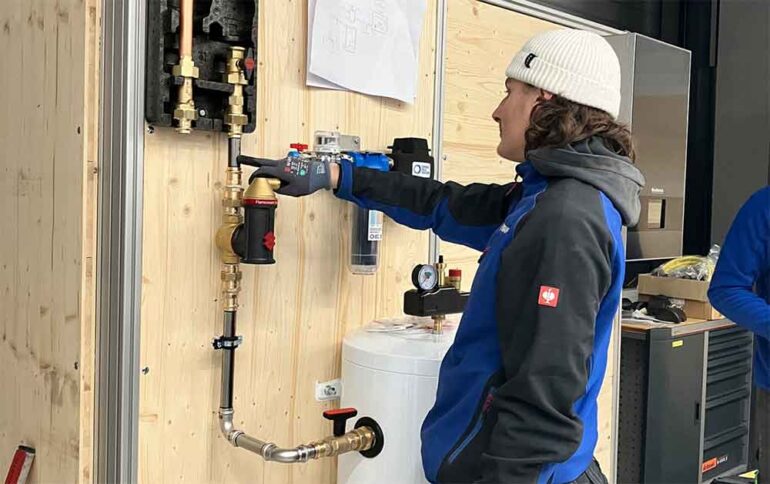
GERMANY: Researchers in Germany are looking at ways to make heat pump installations faster, more productive and more efficient despite the shortage of skilled workers.
The researchers from the Fraunhofer Institute for Building Physics IBP and the Fraunhofer Institute for Solar Energy Systems ISE, together with project partners, are working on a project that combines standardised digital tools with practical installation solutions tested under real-world conditions, with the aim of significantly accelerating future heat pump retrofits.
Coordinated by the German Sanitation, Heating and Air Conditioning Association (Zentralverband Sanitär Heizung Klima, ZVSHK), the WESPE project examines both on-site and digital processes across the entire value chain and aims to reduce installation times by up to 40%.
The project partners identified optimisation opportunities and time-intensive stages throughout the retrofit process, covering both office work and activities on construction sites. They also developed a web-based digital platform intended to streamline installation and order-processing procedures for installers replacing oil and gas heating systems with heat-pump-based systems.
The work began with an analysis of workflows that could be improved or digitised, including condition assessment, customer communication, site coordination, logistics, material procurement and installation. The resulting information and resources for the relevant phases were then made available through the platform.
“The goal is to highlight practical options, tools and approaches that installation businesses can use to further develop their internal processes, especially since the increasingly complex technical requirements of heating systems increase the planning effort as well as the risk of errors during implementation,” explained Susanne Schwab, a researcher at Fraunhofer IBP.
On the platform, users can access all the necessary tools and instructions and employ these to simplify and accelerate the respective work steps. Users can access sections on customer consultation, planning and quotation preparation, site preparation, installation, commissioning and invoicing with the corresponding guidance and resources.
A preliminary questionnaire, the WESPE Check, allows installation businesses to assess their current status in each area and receive customised tips, including recommendations for digital and physical resources, suitable tools, organisational measures or external services.
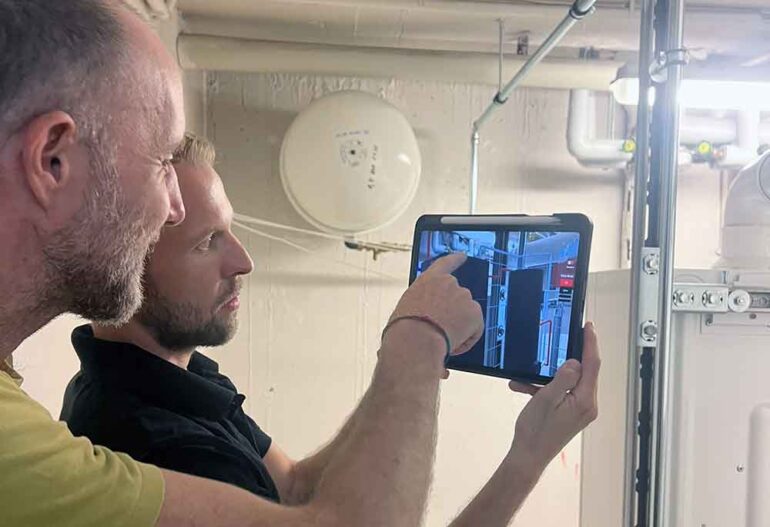
Fraunhofer ISE is researching digital workflows and software tools designed to integrate multiple work steps in the office and on site more effectively. The prototype Heat Pump PlanAR app was also developed within the project. In the future, the augmented-reality application could support heating installation technicians by generating preliminary planning and quotations in a matter of seconds while automatically producing cost-optimised piping for digitally represented heating components.
The app is designed to bring as many work steps as possible into one tool, replacing a process in which multiple software applications are used and data must be transferred manually between them.
Fifteen specialist installation businesses are taking part in the project, documenting processes in their offices and at 30 installation sites, while helping the research team identify practical use cases. A time-tracking app measures the time required for individual on-site tasks.
In parallel, Fraunhofer IBP has established a physical innovation lab on its campus in Holzkirchen to provide a realistic setting for developing and testing heat pump installation methods. Typical installation scenarios were recreated in the basement of one of the institute’s two twin buildings, which are identical single-family homes used as a research and demonstration platform for studies under real-world conditions.
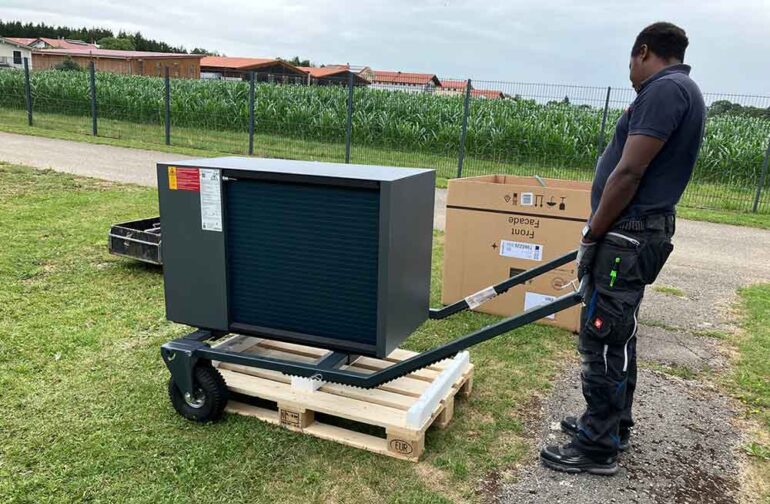
Additional test environments in the IBP lab and a utility container supplemented these facilities and made it possible to commission heat pump systems under defined conditions.
Working with installation companies, the researchers tested new components, system solutions and installation procedures under realistic conditions. The trials examined, among other things, prefabricated foundations, building penetrations, hydraulic solutions and pre-assembled components for their potential to reduce installation times and simplify workflows on construction sites.
Researchers monitored and evaluated the field tests together with installation businesses and industry representatives to identify further opportunities to optimise heat pump installation. The work showed that standardised components, pre-assembled units and optimised processes, in particular, can shorten installation times and substantially improve efficiency. Findings from the trials were incorporated directly into the continued development of components and processes and adapted for practical use.
“In the WESPE project, we were able to bring together all stakeholders across the entire value chain: researchers, the skilled-trade sector and industry partners. We are optimistic that this collaboration will significantly advance the transition to sustainable heating,” said Fraunhofer ISE researcher Annette Uhl.