


Are chillers the answer in a low GWP world?
21st April 2015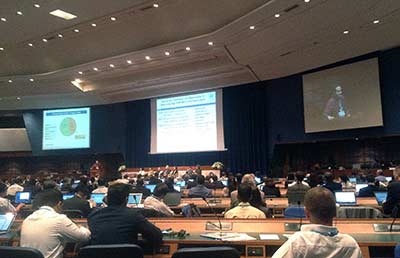
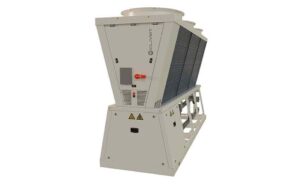
THAILAND: With medium-sized air conditioning systems remaining a challenge for low GWP alternatives, the future might see a much broader use of chillers.
While there are a number of alternative low GWP refrigerant technologies available for chillers, and there is movement towards lower GWP alternatives for small self-contained air conditioning systems, medium-size air conditioning systems, however, are subject to challenges in the identification of suitable substitutes.
This was one of the conclusions of in-depth discussions between technical experts and industry representatives from around the world at a two-day workshop on HFCs and their alternatives, which preceded this week’s Montreal Protocol meeting in Bangkok.
As the world moves towards the adoption of lower GWP refrigerants, one possible contribution to solve the problem, it was suggested, would be to change systems towards a broader use of chillers. Another might be the use of mildly flammable refrigerants for smaller to medium-size systems. However, a clear path forward could not be provided by the attendees. The problem was seen to be particularly pronounced for high-ambient climates, where air conditioning is essential and medium capacity systems are particularly prevalent. However many examples were provided where lower GWP options for all uses can be adapted in principle to the highest ambient conditions.
Chillers were seen as a sub-sector with good low GWP alternatives available now or in the near future. These alternatives include hydrocarbons, HFOs, ammonia and water.
For smaller capacity mini split systems hydrocarbons and HFC32 are already available as alternatives. Due to charge size restrictions in the relevant standards, the maximum capacity of hydrocarbon systems was recognised as being limited. One participant advised that up to 3.5kW capacity, R290 (propane) could be used. For larger systems such as unitary equipment and multi-split air conditioners, no non-HFC alternatives were named. Refrigerants with the “mildly flammable” safety classification A2L, such as R32, can be used up to a charge size of around 60kg; this would cover a large segment of the market.
The refrigeration, air conditioning and heat pumps market is the predominant user of HFCs, accounting for 86% of HFC use in terms of GWP-weighted tonnes CO2 equivalent. It is estimated that 56% of the global GWP-weighted HFC consumption is for air-conditioning and 30% is for refrigeration.
Air-to-air air-conditioning systems, commercial refrigeration systems and mobile air-conditioning systems dominate the use of HFCs, representing 25%, 22% and 20% of global warming weighted HFC use, respectively. Chillers and industrial refrigeration systems account for another 8% and 6% of global-warming-weighted HFC use, respectively.