


Embraco sees R513A as R134a transitional
17th April 2017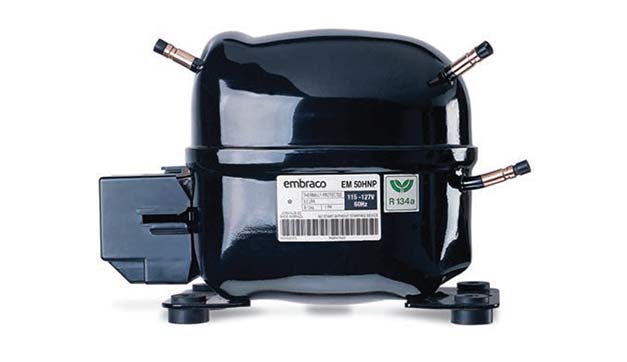
BRAZIL: Compressor manufacturer Embraco has named R513A as the only HFC blend approved as a transitional refrigerant for its R134a models.
The company’s latest Position Paper on Light Commercial Refrigeration is based upon Embraco’s own tests to assess the transitory solutions towards low GWP refrigerants. The latest paper builds on Embraco’s report last year and reconfirms that it views the hydrocarbons R600a (isobutane) and R290 (propane) as the best, long term solution for light commercial applications both in low and medium pressure.
Although safety concerns currently limit use of these highly flammable refrigerants, Embraco expects future legislation changes to remove part of existing road blocks related to charge limits.
R513A, a refrigerant marketed by Chemours as XP10, has been approved by Embraco as an acceptable alternative to R134a for the transition period to 2022. With a GWP of 573 it provides a 56% reduction in GWP compared to R134a.
 The HFO R1234yf was previously named as an acceptable long term alternative for R134a, but Embraco recognises that the flammability of all A2L refrigerants requires a specific product line for this refrigerant.
Embraco has said it cannot consider R407F, R407A, R448A, nor R449A as an alternative replacement refrigerant for systems using Embraco R404A compressors. These refrigerants, it maintains, may require system changes such as, system condensing temperature reduction (larger condenser, improved ventilation) or return gas temperature reduction in order to achieve a similar thermal profile as with refrigerant R404A.
The company previously approved R452A as an alternative to R404A.
To maintain its warranty, Embraco insists that final application needs to be validated by its technical support team case by case. Usage in systems operating under high compression ratio conditions in particular should be avoided, it says.
“We recommend, if possible, go directly to the final refrigerants,” the company says. “For the time being only hydrocarbons can be considered a final solution, while synthetic refrigerants options are still under development and the legislation to allow their use, is still under development. Every appliance producer has to make a choice: go natural or wait for new synthetic blends when ready.”
The latest 2017 Position Paper can be downloaded here.
Related stories:
https://www.coolingpost.com/world-news/embraco-sees-hcs-as-the-low-gwp-solution/