


Report urges investment in supermarket refrigeration
25th November 2026
UK: A new report reveals how replacing aging supermarket refrigeration equipment with systems using “natural” refrigerants can deliver substantial operational savings.
The report – Financing the Supermarket Cooling Transition – from the London-based Environmental Investigation Agency (EIA) prompts retailers and investors to rethink how supermarket refrigeration is valued and financed.
Analysis of retailer data indicates that annual energy savings average about 24% of the investment in these systems, while evidence from two retailers estimate that annual savings rise to 32-38% when the avoided costs of F-gas refrigerants are included.
The EIA argues that these savings are increasingly important as retailers face rising energy and F-gas refrigerant costs. The report also highlights evidence that modern CO2 refrigeration systems can operate reliably in extreme heat, with retailers reporting successful operation at temperatures of 40-45°C.
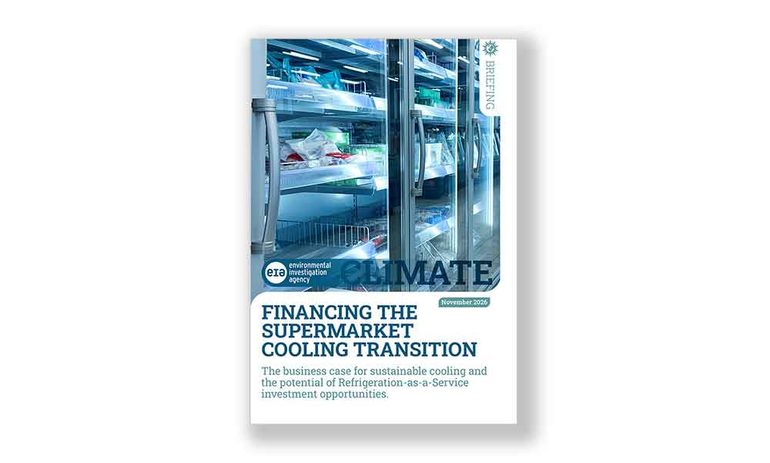
Yet despite the clear business case, the EIA laments that the transition remains slow, with upfront capital required to replace refrigeration systems cited as a major barrier. The report highlights refrigeration-as-a-service as one way to overcome this challenge.
Under this model, a specialist provider covers the installation costs and maintains refrigeration equipment, while the supermarket pays for cooling through an ongoing service agreement. This shifts the burden of upfront investment away from retailers, while creating opportunities for investors to generate predictable, long-term returns from essential infrastructure.
“Recent cyber-attacks have shown just how quickly a failure in supermarket refrigeration can become a major business and food security issue. Add in the growing pressure from extreme heat, rising energy costs and the phase-out of climate-polluting HFC refrigerants and the case for modernising these systems is clear,” commented EIA UK’s climate programme campaign lead Fionnuala Walravens.
“Supermarket refrigeration needs to be recognised as critical infrastructure. The good news is that investing in modern, sustainable systems can deliver significant operational savings as well as strengthen resilience. The challenge is finding ways to finance that investment at both the scale and speed required.”