


Spool compressor efficiencies hit 80%
11th July 2016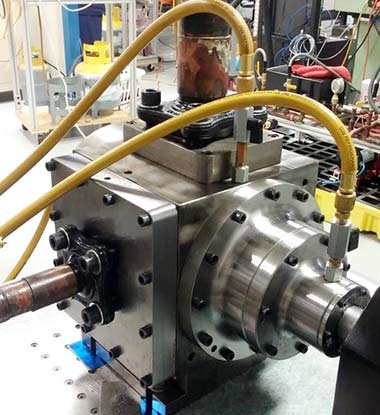 USA: Latest test results on a prototype 141kW spool compressor are said to have recorded overall isentropic efficiencies approaching 80%.
The latest results revealed by developer Torad Engineering will be presented today at the International Compressor Engineering Conference at Purdue University.
Test results approaching 80% overall isentropic efficiency are said to have been achieved, which would make it very competitive with screw and scroll compressors. The prototype is also said to have demonstrated variable speed and off-peak operation performance characteristics that would make the technology highly desirable to air conditioning manufacturers.
“The Spool compressor’s demonstrated efficiency and performance characteristics, at this early stage in its development, foretell a bright future for this technology,” said Dr Eckhard Groll, Reilly professor of mechanical engineering, Ray W Herrick Laboratories, at Purdue University. Groll added, “The technology’s strong performance with medium pressure refrigerants could be critical to the development of the next generation of ultra-low GWP air conditioning products.”
The spool compressor resembles a rotary vane compressor, but is described as being smaller, lighter and cheaper to manufacture than current technology. It has four main components: rotor, main housing, vane, and bearing housing.
Patent holder Torad Engineering of Cumming, Georgia, conducts research, development and licensing of the technology which promises cost and efficiency advantages over traditional compressor designs. The compressor prototype has been designed specifically for the next-generation of ultra-low GWP, medium pressure refrigerants.
“Our next step is to move the technology out of our lab and into the hands of our development partners,” said Torad’s chief operating officer Joe Orosz. “We will be working with our current and new partners to further optimise the compressor and develop a semi-hermetic version for field testing.”
Toad has declined to name its five current partners, merely describing them as “leading global manufacturers” of commercial compressors and air conditioning chillers.
For further information on test results here.
The Purdue compressor conference runs from July 11-14.
Information on the Purdue Conferences can be found here.
Related stories:
https://www.coolingpost.com/world-news/spool-compressor-passes-low-gwp-test/