


Fan diffuser brings supermarket savings
8th October 2014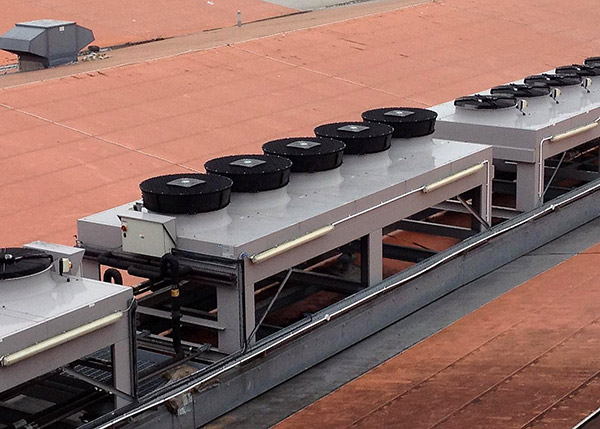 UK: Retrofitting diffusers to existing EC condenser fans are said to have shown savings of up to 51% on one particular UK supermarket installation.
The AxiTop diffuser from Ebm-Papst was included in trials conducted by Bristol-based contractor Space Engineering Services and oem Coolers and Condensers on behalf of a major UK supermarket with the aim to evaluate the energy saving benefits of retrofitting existing EC condenser fans with the new AxiTop diffuser.
The addition of Ebm-Papst’s new AxiTop diffuser to existing EC HyBlade axial fans is said to have demonstrated significant energy savings from 15% to 51% on condenser packs running at part load 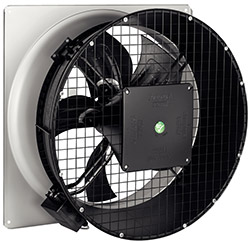 and even improvements of 26% at full load. A recent retrofit on another supermarket showed a payback of three years.
The Axitop diffuser is used on sites with condensers, coolers and chillers and has been developed to fit the Ebm-Papst range of HyBlade axial fans. It is also ideal for retrofitting and, in addition to decreasing the power consumption and increasing fan performance, can reduce the noise levels of existing equipment.
Ebm-Papst insists that by simply replacing a standard fan with a guard grille for one with a support arm, guard grille and AxiTop diffuser, power savings of up to 27% can be achieved, while operating noise is reduced by up to 7.2dB(A).
Condenser trial
In the current trial, sub metering and temperature logging were applied to four condensers, two identical low temperature packs and two identical high temperature packs, and recorded for four weeks.
The AxiTop product was fitted to two condensers, LT2 (three fans) and HT2 (five fans). The other two packs were used as a base line for comparison.
Sub metering and temperature logging continued for a further four weeks.
HT pack data results
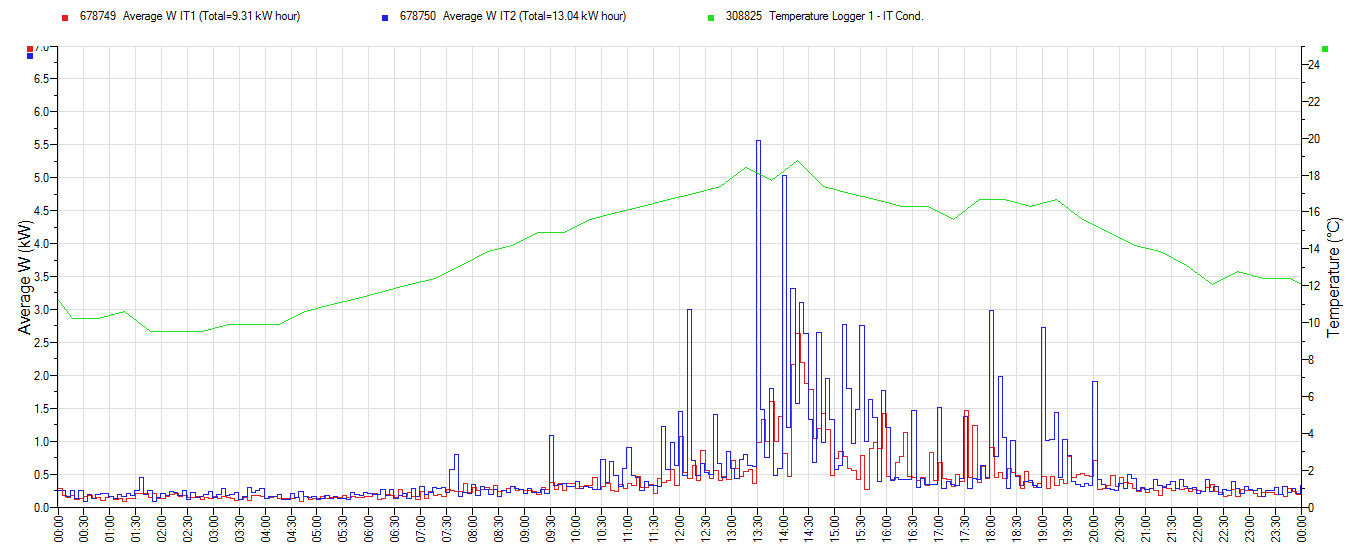
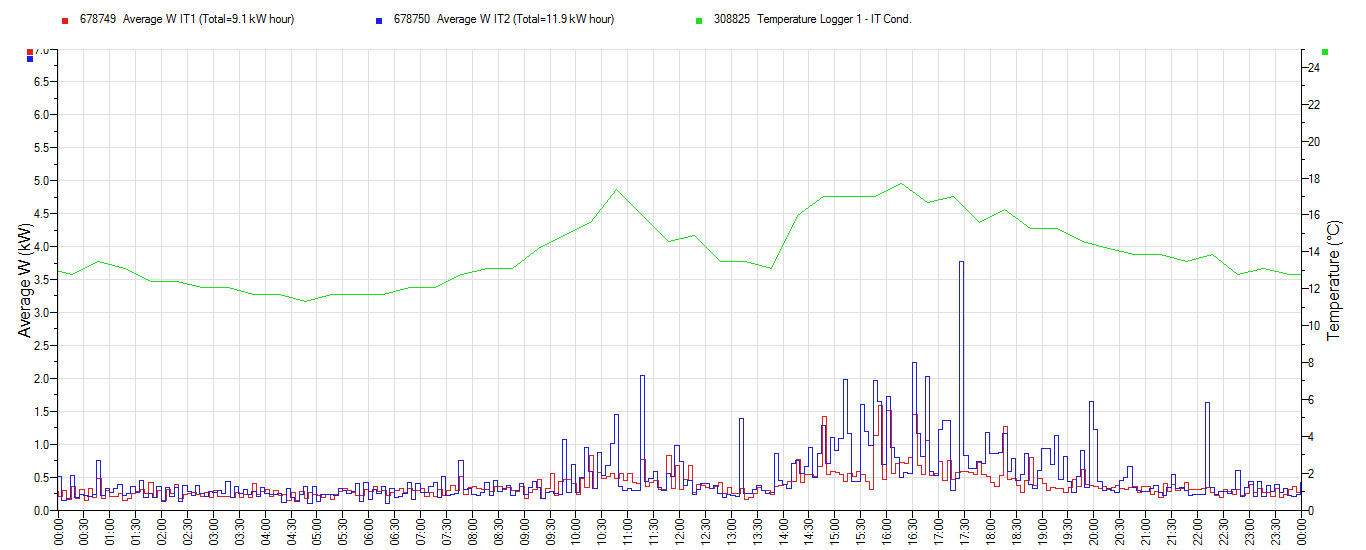
Graphs 1 and 2 show the before and after data for the HT packs. The data was recorded on the same trading day (Saturday) with almost identical average ambient temperature conditions.
The Red trace is the base line unit HT1 which shows a total power consumption of 9.31kWh before and 9.1kWh after which are almost identical readings taking into account the different tolerances on different days.
The Blue trace is from the converted unit HT2. It shows a reduction in total power consumption from 13.04kWh to 11.09kWh, which is a 15% reduction due to AxiTop being fitted.
LT pack data results
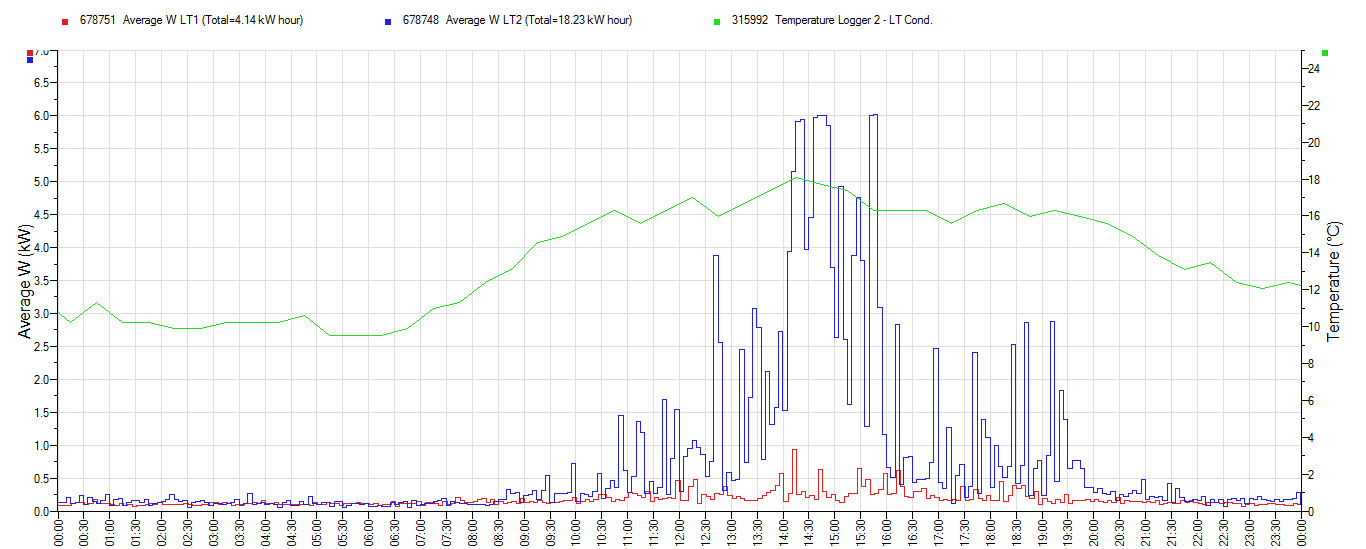
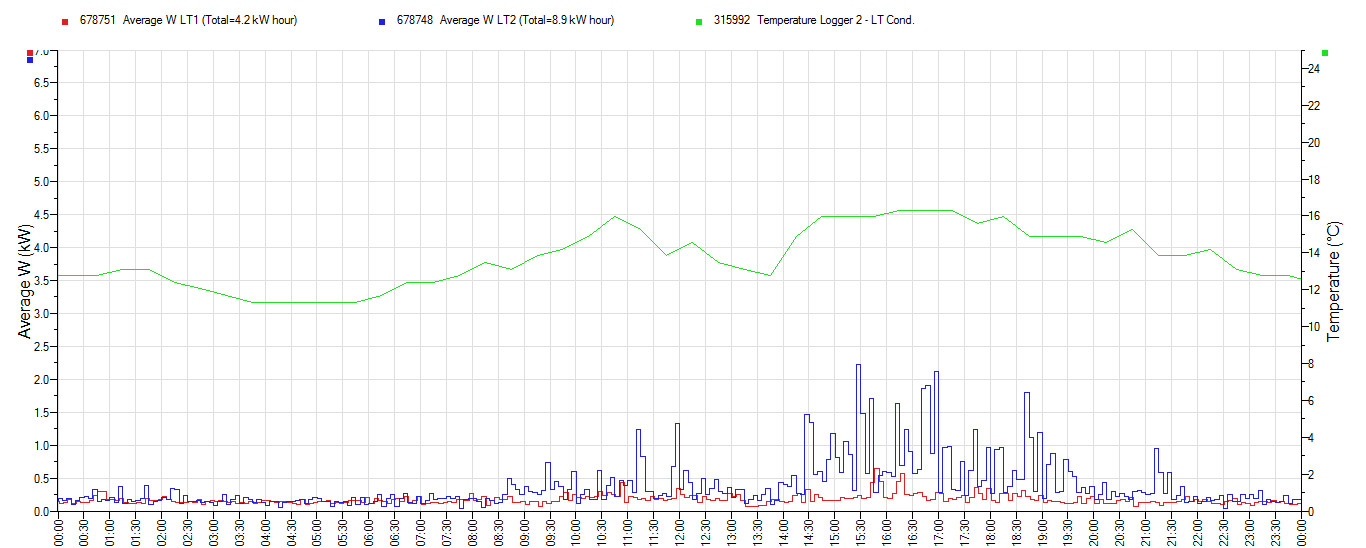
Graph 3 and 4 show the before and after data for the LT packs. The data was, again, recorded on the same trading day, a Saturday, with almost identical average ambient temperature conditions.
The Red trace is the base line unit LT1 which shows a total power consumption of 4.14kWh before and 4.2kWh after which are almost identical readings taking into account the different tolerances on different days.
The Blue trace is from the converted unit LT2 which shows a reduction in total power consumption from 18.23kWh to 8.9kWh which is a 51 per cent reduction due to AxiTop being fitted.
HT pack data results on the hottest day
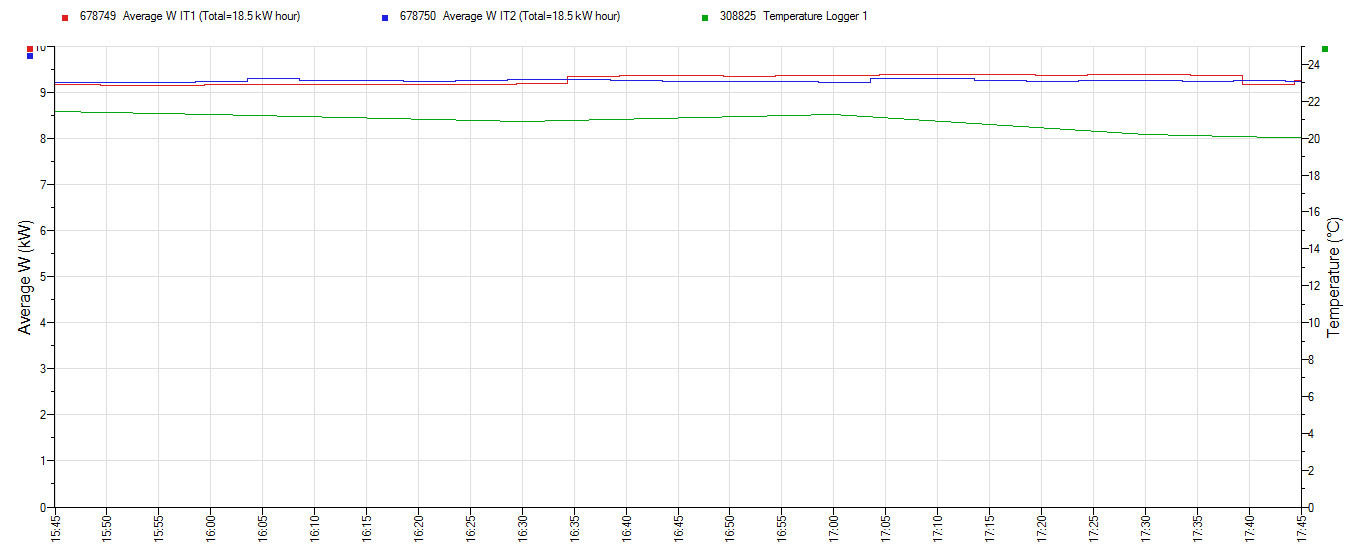
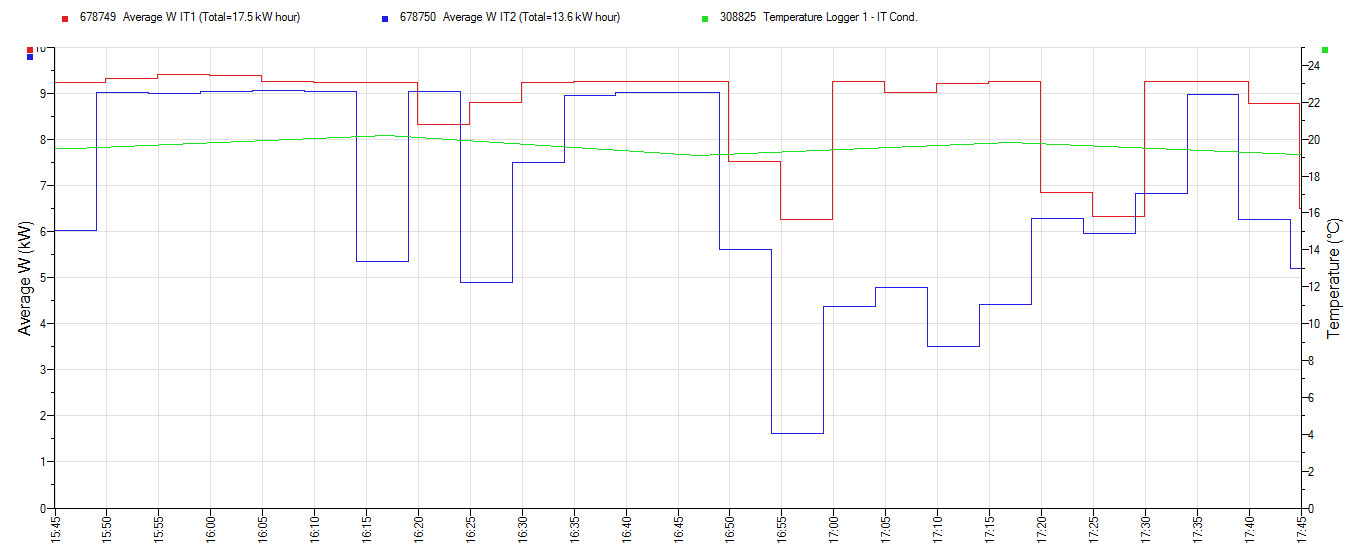
Graph 5 and 6 show data from a two hour window on the hottest day before the retrofit compared to a similar day after conversion. The data is recorded on the same time period, on the same trading day (Monday) with near average ambient temperature conditions.
The Red trace is the base line unit HT1 which shows a total power consumption of 18.5kWh before and 17.5kWh after which is a drop of 1kWh (0.5 per cent).
The Blue trace is from the converted unit HT2 which shows a reduction in total power consumption from 18.5kWh to 13.6kWh which is a 4.9kWh or 26 per cent reduction in this two hour period due to the AxiTop being fitted.
Based on identical trading days with the same ambient conditions, it was shown that the base line packs HT1 and LT1 have performed almost identically.
The AxiTop packs HT2 and LT2 however showed significant savings of 15% and 51% respectively.
It is clear that the LT2 pack improved significantly more than expected and this is believed to be due to the siting of LT2 which is partially surrounded.
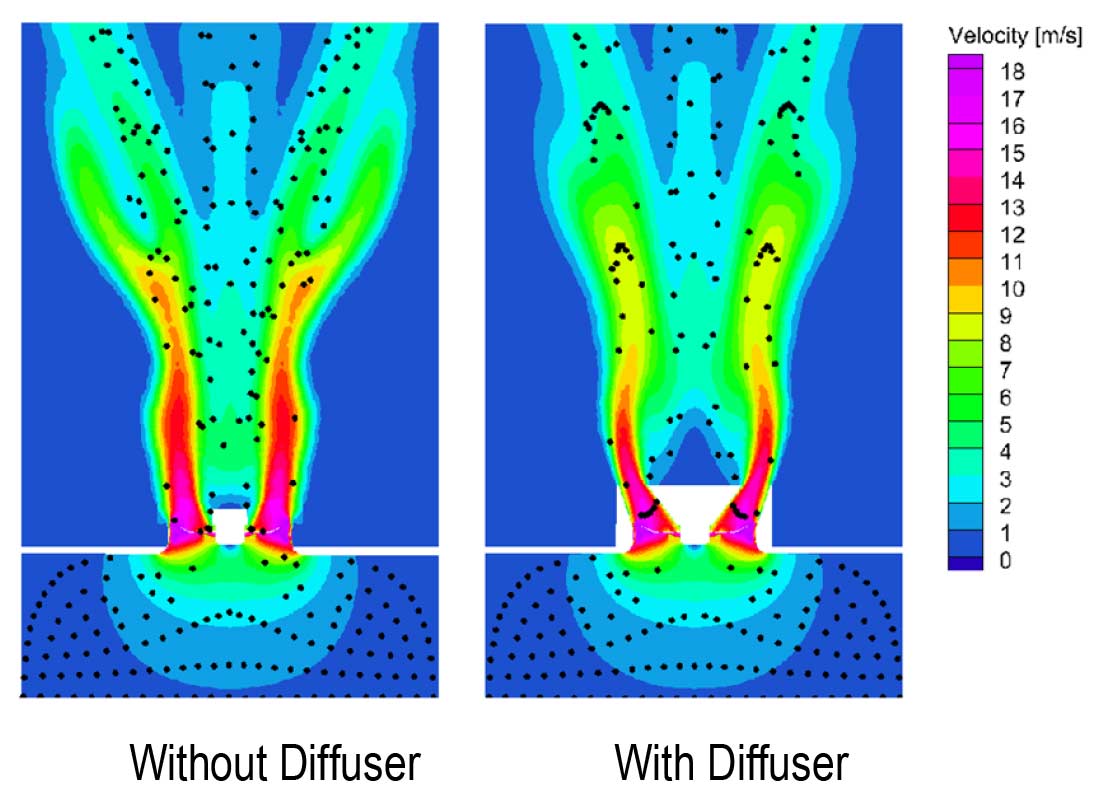
Other than improving the efficiency of the EC axial fans by converting dynamic pressure into useful static pressure, the AxiTop improves the throw of the fan and can prevent air recirculating within the unit when siting conditions are not ideal. Diagram 1 shows a simulation of how the diffuser straightens and improves the throw of the Axial fan.
During high ambient conditions Graph 5 shows identical power consumption for both HT condensers with all fans running at their maximum. Following the conversion of HT2 there is a marked reduction due to the AxiTop diffuser of 26% even with the fans running at maximum speed.
When the trace drops as shown in Graph 6, this shows the discharge pressure set point from the pack is being achieved and so allows the fans to ramp down. HT2 is achieving this more often than HT1 and for a greater length of time so energy is being saved not only from the fan energy reduction but also from the compressors as well.