


GEA heat pumps in largest mine water project
20th June 2023
GERMANY/UK: High performance ammonia heat pumps are the driving force in the largest mine water heat network in Great Britain.
The Gateshead Mine Water Scheme uses two 3MW ammonia heat pumps from German manufacturer GEA to meet the heat demand of the buildings connected to the Gateshead district heating network.
Funded by the Heat Network Investment Project (HNIP) and Gateshead Council, the scheme took about three years to deliver and went live at the end of March. It is the largest mine water heat network in Great Britain and one of the largest in Europe.
The existing municipal heating network, which already supplies 18 public and private buildings and 350 households, has been operating since 2018 but, until now, the water in the network has been heated solely by gas-powered CHP engines.
Gateshead in the north east of England, near Newcastle, was once the largest supplier of coal in the world. The last coal mines in the area closed in the 1960s and the the tunnels have since filled with water – which now becomes the source of energy for the heat pumps.

The water is pumped from a depth of 150m from the old mine to the ground level plantroom housing the GEA ammonia heat pumps. These boost the temperature of the water from 15ºC to 80ºC. The water is returned to the mine at 8ºC.
To optimise the performance of the heat pump system, a two-stage compression cycle with screw compressors is used. Groundwater is filtered and pumped through titanium plate and frame heat exchangers. Titanium was chosen for the evaporator plates to match the quality of the groundwater. On the heating side, several heat exchangers are connected in series to optimise the efficiency of the heat pump solution.
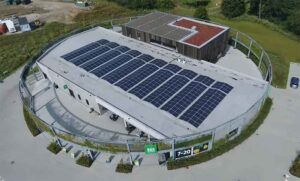
Solar parks are also part of the concept. These will be used to supplement the energy required to run the heat pumps.
Ammonia was chosen as the refrigerant for this application because, under the given conditions in Gateshead, ammonia heat pumps were found to be 10% to 20% more efficient than HFC/HFO solutions.
GEA has been involved in other innovative heat pump projects for district heating in the UK in the past, including the installation of a heat pump that extracts heat from the London Underground ventilation air and provides heat for a high-rise building in Islington.
Related stories:
Coal mine leads a green revolution – 20 July 2022
UK: An ammonia heat pump from German manufacturer GEA is being used in a project using the water in an abandoned coal mine to supply a 6MW district heating network. Read more…