


Future AC – TCUK has it covered
27th November 2018
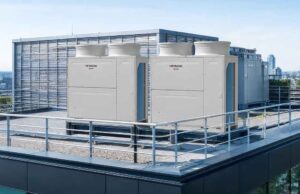
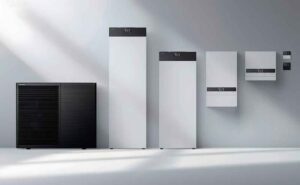
UK: Toshiba Carrier UK (TCUK) says that it is still uncertain whether the future of air conditioning lies in VRF technology or in chiller-based systems.
While VRF has taken over from chillers as the main air conditioning technology in recent years, the F-gas phase down has cast doubt over the future of such a refrigerant dependent technology when there appears to be no immediate low GWP replacement for R410A.
Speaking at the recent UK Construction Week exhibition, David Dunn, TCUK’s managing director sales acknowledged that as a producer of both technologies, Toshiba Carrier was well-placed to provide a perspective on the issue.
“We believe the dominant solution won’t become clear until the current uncertainties over refrigerant options have been resolved,” he said. “However, we are evaluating a number of alternatives and customers can rest assured that with our leadership in both areas of technology, we will have a proven, best-in-class solution that will exceed efficiency and environmental requirements.”
Dunn reminded delegates that the transition from chillers to VRF systems in the 80s and 90s marked a watershed in terms of technology. That settled picture over the past three decades was now being challenged, he said, as chillers once again came to the fore and were looking to reclaim ground taken by VRF technology.
However, he cautioned that the outcome was by no means a forgone conclusion, as the efficiency and flexibility benefits of VRF remained attractive and compelling. There were benefits for both technologies, he concluded, with chillers making big advances in technology, efficiency and potentially faster implementation of low GWP refrigerants. “On the other hand, VRF has transitioned to new forms in the past, and I have no doubt that the next generation of VRF systems will bring further important advances in DX refrigerant technology.
“Given the uncertainties, people are understandably nervous. However, our message to customers is – we are confident that we have all the bases covered, in both VRF, chiller and rooftop categories.”
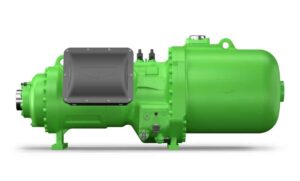
Last week, the Cooling Post revealed that Carrier had developed a prototype high speed screw compressor and tested it with a new low pressure, non flammable HFO refrigerant as a potential long term solution for VRF air conditioning systems.
Related stories:
Is this the future for air conditioning? – 19 November 2018
USA: The development of a high speed compressor working with a low pressure refrigerant could herald a low gwp, non flammable future for air conditioning. Read more…