


New cooling system trialled on London Tube
23rd July 2022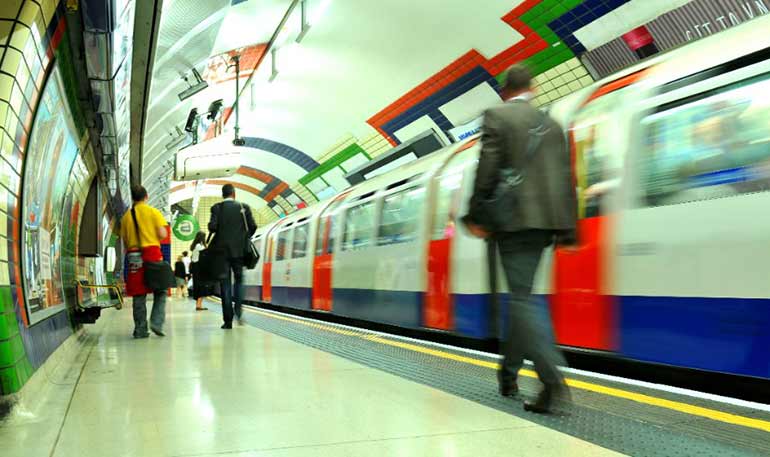
UK: A new cooling solution is being trialled on the London Underground with a view to reducing temperatures on the network’s deep stations.
Operator Transport for London (TfL) is now trialling a state-of-the-art cooling panel on a disused platform at Holborn station. If successful the panels could be installed at five stations on the Piccadilly line – one of the the deep Tube lines that also include the Bakerloo, Central, Jubilee, Northern, Victoria and Waterloo & City lines.
The tests aim to reduce platform and tunnel temperatures at deep Tube stations, with a view to installing them at five stations on the Piccadilly line.
The trial is part of the UK government’s TIES Living Lab programme, a collaboration of 25 partners focusing on 10 infrastructure, data research and digital demonstrator projects, of which the cooling panels are one. The cooling panel project was 70% funded by the Department for Transport and Innovate UK.
The existing approach to cooling, using platform air handling units has struggled to operate effectively. It has experienced a build up of tunnel dust over the years, which has significantly decreased its efficiency, as well as creating general installation and maintenance challenges. TfL’s new cooling technology mitigates these issues; the cooling panel is a modular design, with minimal dust build up and easy access to the fan, making them generally more maintainable.
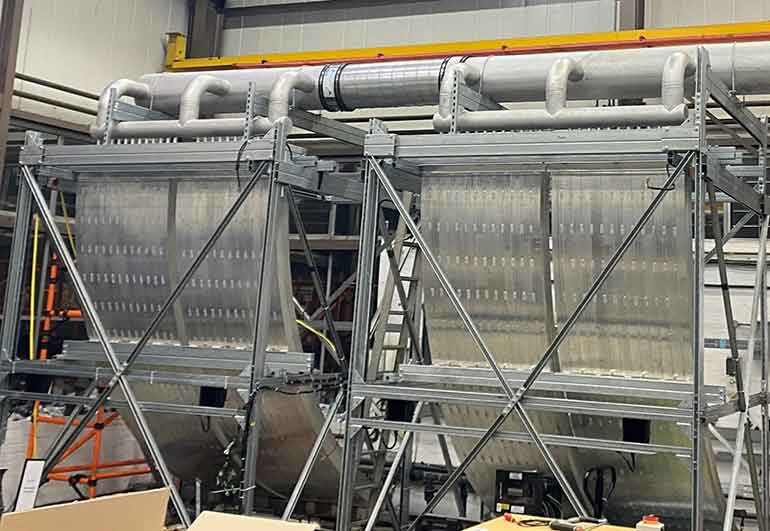
The proposed cooling panel works by circulating cold water around pipework within a curved metal structure to chill it. It then circulates air, using a large fan, through gaps in the panel’s structure, which in turn is cooled. Operator Transport for London (TfL) says the panel could also have the benefit of halving operational and maintenance costs, compared to existing technology used to manage temperatures on Tube lines.
In the past it has been challenging to lower temperatures on the deep Tube lines, as traditional cooling systems have proved prohibitively expensive and difficult to install within the 120-year-old tunnels and stations. Lab tests have shown that the cooling panel provides a 5ºC reduction in temperature when installed on a single underground platform. TfL is now keen to see if this can be replicated on the disused platform at Holborn, which mimics the live environment that these panels would operate in.
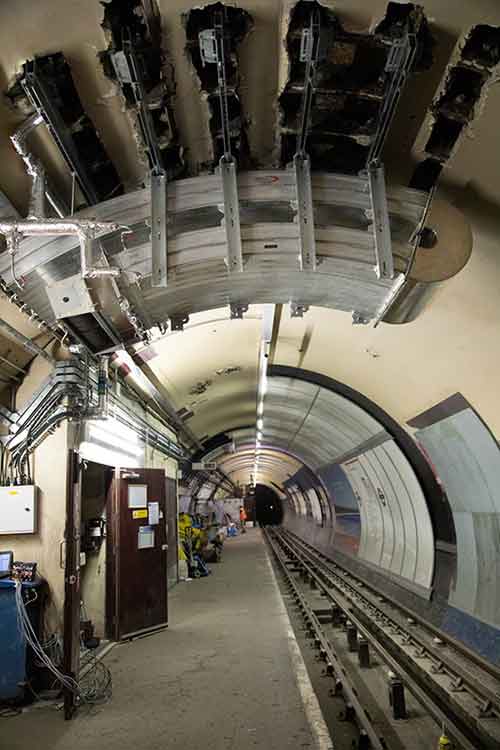
The new convection cooling system, which has a predicted cooling power of 9-12kW, has been designed by TfL and developed by SRC Infrastructure, which also managed its build. The panels were manufactured by Chesterfield-based MD Direct Engineering.
They are constructed from custom aluminium extrusions that are welded together. The design allows air to flow uniformly through the panel, parallel to the water flow. By having the water flow parallel with the air, efficient heat transfer can be obtained while not providing pockets for dust to get caught and build up. The single repeating extrusion profile means the panels can vary in width, meaning they can be formed to meet the site requirements easily. There are also no active components of the panel installed over the track, meaning the cool air is outputted directly onto the platform.
Following the trial at Holborn station and subject to funding being available, TfL says it will explore whether the panels could provide a cooling solution for other deep Tube lines in the future. This would include testing the system at Knightsbridge station before potentially introducing them at four additional stations on the Piccadilly line – Green Park, Holborn, Leicester Square and Piccadilly Circus.
TfL says it could then identify other locations where the panels could provide a benefit but would be dependent upon sufficient long-term capital funding being available.