


$150m boost to improve African cold chain
5th October 2022
AFRICA: An investment of US$150m has established a pan-African cold chain logistics platform to improve essential food security across sub-Saharan Africa.
The temperature-controlled logistics infrastructure in sub-Saharan Africa is underdeveloped, and in places non-existent. The current population growth rates mixed with the rapid rate of urbanisation, is expected to worsen the deficit.
To try and improve the situation, African Infrastructure Investment Managers (AIIM) and its investment partners, Bauta Logistics and Mokobela Shakati (Pty) Ltd Consortium have established Commercial Cold Holdings (CCH).
CCH will focus on acquiring and developing facilities with strategic physical locations and/or integration with market-leading food producers, wholesalers, and retailers.
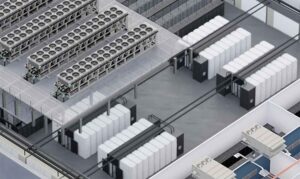
The intention is to invest up to US$150m in the platform, which began with the initial acquisition of CCS Logistics from Oceana Group. CCS has been operational for over 50 years and is an established leader in South Africa’s temperature-controlled logistics (TCL) market. CCS currently operates about 100,000 pallets of storage across six facilities in Johannesburg, Cape Town and Walvis Bay, Namibia.
“South Africa, which possesses the continent’s most advanced TCL infrastructure at 13m3 of cold storage per 1,000 residents, lags comparable economies such as Egypt and Brazil, which have 105m3 and 83m3, respectively, our research has indicated,” said AIIM investment director Damilola Agbaje.
“TCL infrastructure is critical for both improving Sub-Saharan Africa’s food security; allowing domestic producers to meet the standards required to participate in global trade; and creating higher value jobs through more formal food retail and wholesale models.”
He explained that CCH would focus on acquiring and developing facilities with strategic physical locations and/or integration with market-leading food producers, wholesalers, and retailers.
Agbaje said that AIIM recognised that cold stores were energy intensive and would leverage its extensive track record in energy investment across the continent to drive efficiency and improve the CCS generation mix.
“Recently, in South Africa, the power grid has experienced reliability issues. Any worsening of the current supply situation poses a risk and constraint to the TCL sector. By deploying captive renewable energy generation and battery storage with AIIM partner companies, CCH expects to reduce the risk of grid reliability constraints and drive growth,” Agbaje said.