


ASHRAE funds refrigerant flammability tests
13th April 2015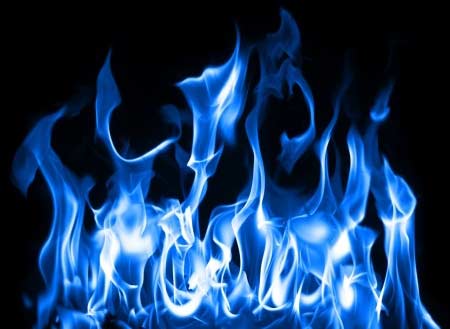 USA: ASHRAE has awarded a $195,000 grant to the University of Maryland to more accurately determine refrigerant flammability.
The project, titled 1717-TRP, Improve the Accuracy and Reproducibility of the Flammability Test Method ASTM E681, has been awarded to the university’s Department of Fire Protection Engineering (FPE). ASTM E681 is the standard test method to determine refrigerant flammability.
The move towards the adoption of low global warming potential refrigerants will increase the use of flammable and “mildly flammable’ refrigerants. Classifying some of these new gases, particularly some of the new blends can be problematic. According to ASHRAE, ASTM E681 is insufficient to accurately and precisely determine their flammability. Revisions to the test method are needed to correct this and allow SSPC 34 to properly identify their safety classification for use by the industry.
This project supports the ASHRAE Research Strategic Plan 2010-2015 for support of research into new alternative low global warming potential refrigerants by addressing difficulties experienced in their flammability assessment and identifying corrections needed in the test approach to result in proper safety data development and classification for flammability.
ASHRAE’s A2L “mildly flammable” classification is an example. The A2L designation requires a lower flammability limit above 3.5%, a heat of combustion below 19kJ/g, and a laminar flame speed of less than 10cm/s. Blends of A2L and A1 refrigerants may result in A1 classification and low GWP. The ASTM E681 test is essential in determining whether a refrigerant is mildly flammable (A2L) or not flammable (A1).
According to ASHRAE, some of the 2L refrigerants result in flames that are less stable, making flammability property measurement more difficult. In particular, it says, when blending one of these mildly flammable refrigerants with ones that are non-flammable it has been difficult to accurately determine the ratio of the components that form the boundary between a non-flammable and flammable blend. This ratio is termed the critical flammability ratio or CFR. For a given CFR of a blend, there was a wide variation in the test results causing difficulty in classifying the blend in ASHRAE Standard 34 for flammability which would be a safety concern that impacts Standard 15 and codes.
The research will be led by the FPE’s associate professor Peter Sunderland and research associate Dr Vivien Lecoustre, and will run until October 2016.
The project is divided into five tasks: Develop a complete understanding of the ASTM E681 test method; set up a test facility and perform ASTM E681 testing; utilise CFD to aid in understanding the problem and in finding solutions; recommend and justify improvements to ASTM E681; and document these findings and present them to the ASHRAE community.