


Grey outlook for US refrigerant cylinders
29th June 2016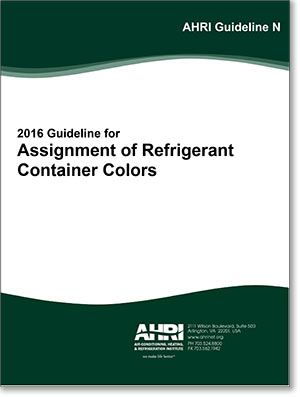 USA: The AHRI has announced significant changes to US refrigerant paint colour designations in the revised version of its refrigerant container colour guidelines.
Revisions now specify that all refrigerant containers should have one uniform paint colour, a light-green grey (RAL 7044), and that existing individually assigned container paint colours should be transitioned to that colour by 2020. The AHRI points out that the label will in future serve as the primary means of positively identifying the type of refrigerant in a cylinder or drum.
The AHRI (Air Conditioning, Heating, and Refrigeration Institute) Guideline N, Assignment of Refrigerant Container Colors, previously stipulated that specific paint colours be used for refrigerant containers as an additional means of refrigerant identification. However, with the increasing number of refrigerants approved for use, there was concern over the potential misidentification of similarly coloured containers.
More than half of respondents to an AHRI survey of refrigerant handlers found that container colours had caused confusion. This confusion was likely to increase as new refrigerants are added to the market.
“Misidentifying refrigerants can lead to serious safety issues since refrigerants have different operating pressures and, in some cases, flammable properties,” said Maureen Beatty, who chairs the AHRI committee that oversaw the revision. “It can also cause equipment damage if refrigerants are used in the wrong applications. Therefore, we decided the best course of action for the industry was to update the guideline to ensure that refrigerants continue to be used correctly and safely based on the required product markings and labels.”
The US Code of Federal Regulations (CFR) Title 49 for hazmat transportation regulations and CFR Title 29 for occupational safety and health regulations require that all hazardous material containers, including refrigerant cylinders and drums, be properly labelled to clearly identify the contents.
While AHRI guidelines serve as recommendations for US industry and are not required by law, most of the US industry uses Guideline N.
AHRI says it will continue to assign individual PMS ink colours for printed materials only, including the product label on containers and container cartons. The guideline already requires that all flammable refrigerants include a red band on top of the container. As with all AHRI standards and guidelines, Guideline N is free to download from AHRI’s website.
Related stories:
https://www.coolingpost.com/world-news/ahri-tackles-colour-confusion/