


Panasonic proves nanoe effect on hay fever
15th February 2026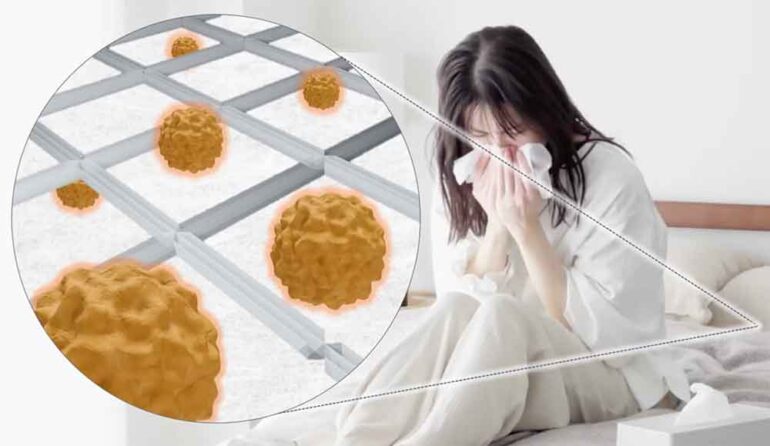
JAPAN: Human clinical trials of Panasonic’s nanoe air purification technology is said to have shown overall improvements in hay fever symptoms.
Panasonic has previously demonstrated that its nanoe (electrostatically charged water particle) technology, which is widely used in its air conditioning products, can suppress allergic reactions to 17 major species of pollen in Japan, as well as allergic reactions at the cellular level. However, its effects on naturally occurring pollen on human symptoms had not previously been clarified.
In this test, subjects entered a large space of approximately 60ft2 (5.6m2) that absorbed naturally dispersed pollen, simulating an environment similar to that of actual use, and evaluated changes in symptoms with and without nanoe technology. The results demonstrated that symptoms were significantly improved in an environment where a test device equipped with nanoe technology was used, under conditions that eliminated the influence of placebo effects and evaluator bias.
The test were carried out on 101 men and women aged 18 to 65 who were aware of nasal symptoms caused by cedar pollen.
A double-blind test was conducted in which neither the test subjects nor the evaluators knew whether or not nanoe (electrostatically charged water particles) technology was used, eliminating the influence of psychological bias. For the first time in the world, nanoe (electrostatically charged water particle) technology was demonstrated to significantly improve hay fever symptoms using the VAS (visual analogue scale) evaluation method, which is widely used in clinical research and the medical field.
The joint research was conducted with Professor Shigeharu Fujieda of the Department of Otolaryngology and Head and Neck Surgery at the University of Fukui’s Faculty of Medical Sciences.