


Delivering net zero healthcare
23rd July 2026
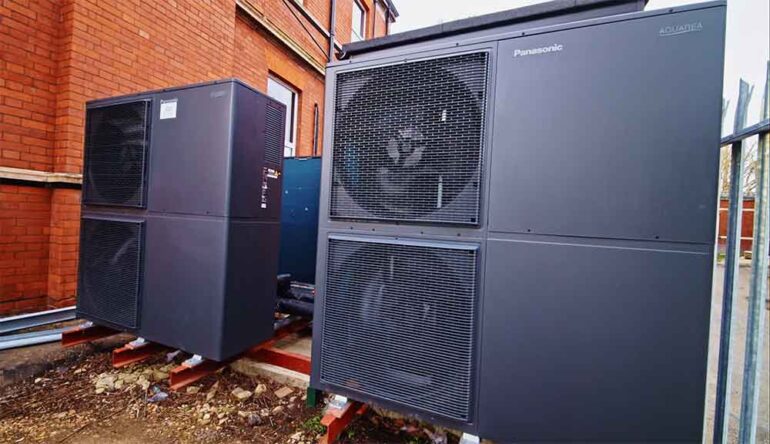
UK: A Panasonic air-source heat pump linked to an hydronic skirting heating system is key to the successful redevelopment of Goodmayes Hospital mental healthcare facility in Ilford, Essex.
Originally built in 1901, the derelict hospital had remained unused for decades and presented a challenge for designers, engineers, and healthcare stakeholders alike. The ambition was not simply to restore the historic building, but to transform it into a modern NHS healthcare facility capable of meeting its long-term sustainability and net zero objectives.
Compounding the challenge was the absence of a viable gas infrastructure. Without access to traditional fossil-fuel heating systems, the project required an alternative solution capable of delivering reliable, NHS-grade heating performance entirely through low-carbon technologies.
While the selection of the heat source was critical, the success of the project depended equally on identifying a suitable heat distribution system. Any heating solution needed to operate effectively at the lower flow temperatures associated with heat pump technology.
Several conventional approaches were assessed but ultimately ruled out. Ceiling-mounted radiant panels presented difficulties, particularly because installation would have required intrusive alterations to protected ceilings and original plasterwork. Underfloor heating was also deemed unsuitable because extensive intervention in the building fabric would have been required, conflicting with both structural and heritage preservation objectives.
Working in collaboration with North East London Foundation Trust, M&E consultants Donabie Associates, and heating systems specialist DiscreteHeat, Panasonic helped deliver a solution that balanced heritage preservation, energy efficiency, operational performance, and patient wellbeing.
The chosen transformation centred on a cascade system of three 30kW Aquarea M series T-CAP air-source heat pumps supplying an hydronic skirting heater system.
Together, the units provide a total heating capacity of 60kW, with a third unit installed for back up/reserve for when any maintenance is required on the units.
T‑CAP technology is Panasonic’s heat pump technology designed to maintain full heating output even in very cold outdoor conditions. Using enhanced compressor and refrigerant injection technology, the T-CAP system is said to deliver reliable performance and maintain rated heating capacity at low temperatures, reducing or eliminating the need for backup electric heating.
The project team selected the ThermaSkirt EasyClean LST system from DiscreteHeat. Installed at skirting-board level, ThermaSkirt combines heat distribution with the architectural function of traditional skirting.
A total of 722m of 2-pipe and 4-pipe ThermaSkirt were installed. The four-pipe BM4 was used in the larger rooms with high ceilings and significant glazing, delivering around 120W/m at 40°C flow.
The ThermaSkirt works well with low-temperature heat pumps and has minimal visual impact within the historic interiors. The system chosen also reduced the need for disruptive structural interventions.
An additional benefit of the ThermaSkirt EasyClean system is its naturally anti-ligature profile. Mental health and healthcare facilities often require careful consideration of potential ligature risks, and conventional heating systems can create challenges in this regard due to their exposed brackets, pipework, and radiator designs.