


Trane trial proves autonomous container performance
6th August 2026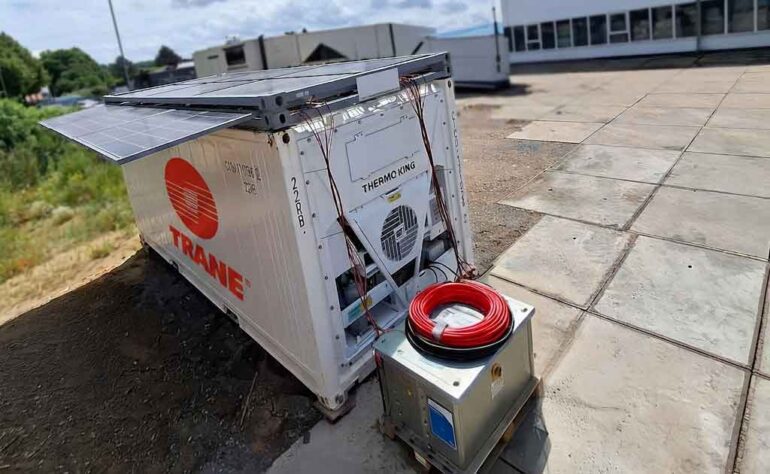
BELGIUM: Trane claims to have completed successful field trials on a new autonomous solar-powered cold storage unit.
Conducted in Germany, the trial showed that the refrigerated container could maintain a -18°C setpoint for more than seven days without any connection to the grid, even under predominantly cloudy conditions.
The tested configuration combined Trane’s ultra-insulated 20ft C-Store Plus refrigerated container, featuring an integrated solar frame with photovoltaic panels, a dedicated DC transformer, and compact battery energy storage system from Trane’s rental fleet.
During the trial, the cold store operated continuously at a -18°C setpoint with ambient temperatures between +20°C and +30°C. Solar power input during operation ranged from approximately 0.5kW in rainy conditions to up to 4.5kW in sunny conditions, offering a strong indication of system performance under variable weather. The 35kWh back-up battery pack remained almost fully charged throughout the duration of the trial.
Despite limited sunshine, the installation remained fully autonomous throughout the tests. The results also confirmed that diffuse daylight can also provide useful solar energy in low-sunlight conditions.
The unit is designed for the European climate and Trane foresees no problem under high ambient conditions. A test was also said to have been carried out during temperatures of 35ºC to 37ºC, without any issues or complications.
The unit is available for short-term and long-term rental through Trane Rental Services, as well as its sister brand ICS Cool Energy.
Trane also offers a standalone solar frame for customers looking to reduce energy consumption and electricity costs on existing cold storage units. The system can be scaled to meet different power requirements by varying the number of solar panels, allowing it to support larger cold storage units, including 40ft containers.
Where regulations permit, excess solar power can be exported to the grid; where it does not, the solar frame can supply direct power to the container, reducing grid demand and lowering operating costs.