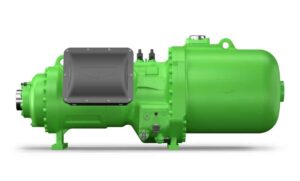



UK should ditch the CE mark on pressure equipment
4th February 2019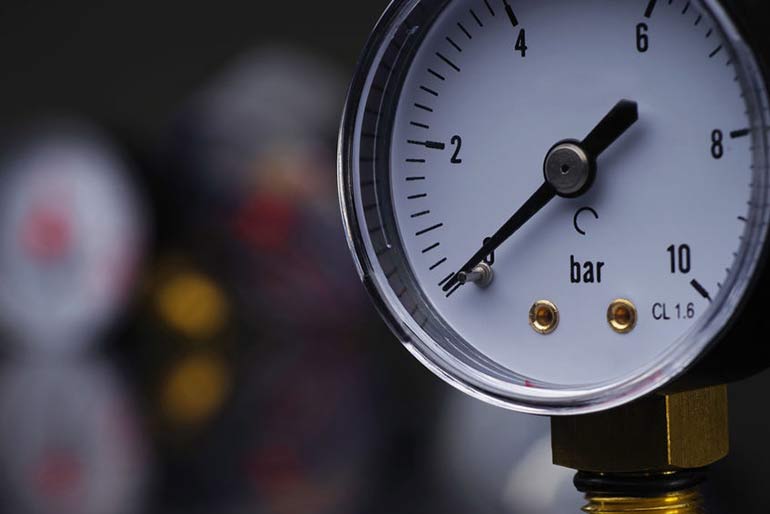
UK: The Institution of Mechanical Engineers says CE marking of pressure equipment should cease to be mandatory in the UK and, instead, only be recognised as a minimum safety benchmark.
The UK has a long history of manufacturing pressure safety equipment which is essential to a wide range of industries, in addition to the air conditioning and refrigeration sectors. If the UK leaves the single market and customs union, equipment makers in the UK will no longer have to certify equipment using the EU’s well known CE safety mark.
The IMechE supports UK government proposing a UK mark and new regulations to maintain safety standards, insisting that provided the UK establishes appropriate safety rules, Brexit may provide new opportunities for UK pressure equipment manufacturers.
“If the UK leaves the customs union, there is an opportunity for the UK to streamline existing legislation and open up the UK to new markets and future trade deals,” said Dr Jenifer Baxter, head of engineering at the IMechE.
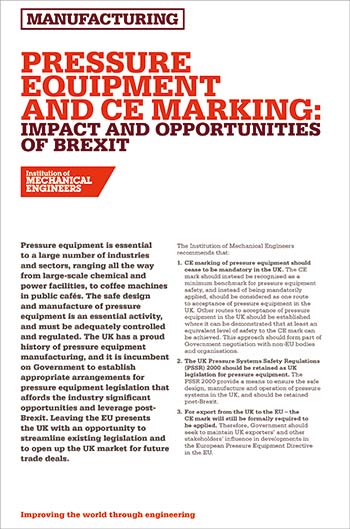
According to a new IMechE report, Pressure Equipment and CE Marking: Impact and Opportunities of Brexit, UK regulations may, in time, come to recognise other national safety rules such as the US National Board and the Japanese high pressure gas control law, where suitable trade relationships have been established and an equivalent level of safety has been demonstrated.
The report says CE marking of pressure equipment should cease to be mandatory in the UK. Instead it insists that the CE mark should be recognised as a minimum benchmark for pressure equipment safety, and instead of being mandatorily applied, should be considered as one route to acceptance of pressure equipment in the UK. Other routes to acceptance of pressure equipment in the UK should be established, it says, where it can be demonstrated that at least an equivalent level of safety to the CE mark can be achieved.
“This approach should form part of Government negotiation with non-EU bodies and organisations,” the report demands.
It recommends that the UK Pressure Systems Safety Regulations (PSSR) 2000 should be retained as UK legislation for pressure equipment.
With the CE mark still being required to be applied for export from the UK to the EU, the report says the government should seek to maintain UK exporters’ and other stakeholders’ influence in developments in the European Pressure Equipment Directive in the EU.
The report can be read and downloaded here.