



Google puts cooling under AI control
19th August 2018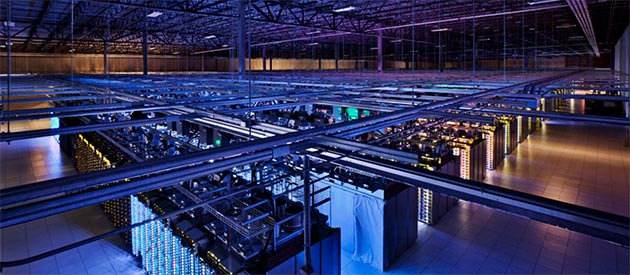
USA: Google has placed the control of its data centre cooling into the hands of an AI-powered recommendation system.
Instead of human-implemented recommendations, Google’s AI system is directly controlling data centre cooling, while remaining under the expert supervision of its data centre operators.
This first-of-its-kind cloud-based control system is now said to be safely delivering energy savings in multiple Google data centres. The AI system was developed with DeepMind Technologies, the British artificial intelligence company acquired by Google in 2014.
Every five minutes, the cloud-based AI pulls a snapshot of the data centre cooling system from thousands of sensors and feeds it into the company’s deep neural networks, which predict how different combinations of potential actions will affect future energy consumption. The AI system then identifies which actions will minimise the energy consumption while satisfying a robust set of safety constraints. Those actions are sent back to the data centre, where the actions are verified by the local control system and then implemented.
Importantly, Google says its data centre operators are always in control and can choose to exit AI control mode at any time.
According to Google, the idea evolved out of feedback from its data centre operators who had been using the AI recommendation system. They reported that although the system had taught them some new best practices—such as spreading the cooling load across more, rather than less, equipment—implementing the recommendations required too much operator effort and supervision. As a result, they wanted to know whether they could achieve similar energy savings without manual implementation.
Google currently operates 15 data centres – nine in the US, two in Asia and four in Europe. They contain thousands of servers that power popular services including Google Search, Gmail and YouTube. All the data centres are powered by renewable energy.
Despite being in place for only a matter of months, the system is already said to be delivering consistent energy savings of around 30% on average. The nature of AI means that further savings are expected in the future.
“It was amazing to see the AI learn to take advantage of winter conditions and produce colder than normal water, which reduces the energy required for cooling within the data centre,” commented Dan Fuenffinger, one of Google’s data centre operators who has worked extensively alongside the system. “Rules don’t get better over time, but AI does,” he added.