


Polyimides could be alternative to dehumidification technology
3rd April 2021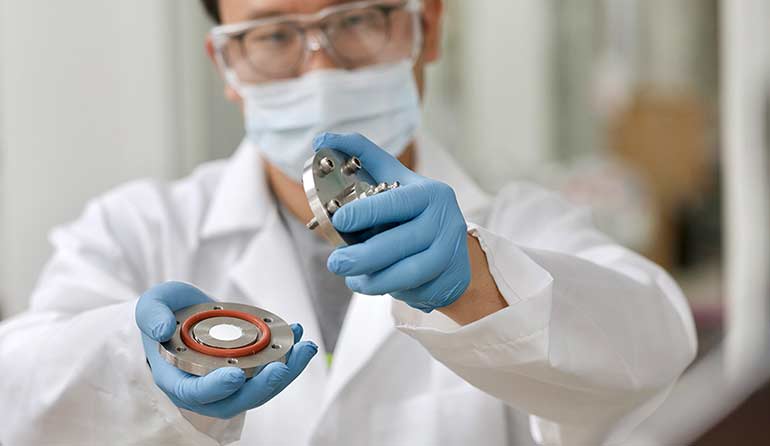
USA: Researchers at Texas A&M University have been working with an organic material called polyimides that could provide an energy efficient and lower cost alternative to refrigerant-based dehumidifiers.
Polyimides belong to the class of high performance plastics and are well-known for their high rigidity as well as tolerance for heat and chemicals.
Dr Hae-Kwon Jeong, McFerrin professor in the Artie McFerrin Department of Chemical Engineering explained that the team took an existing and rather robust polymer and then improved its dehumidification efficiency. “These polymer-based membranes, we think, will help develop the next generation of HVAC and dehumidifier technologies that are not just more efficient than current systems but also have a smaller carbon footprint,” he said.
Desiccants like zeolites are a current “green” alternative to refrigerant-based technology but pose their own challenges.
“Scaling up is a big problem with zeolite membranes,” said Jeong. “Firstly, zeolites are expensive to synthesize. Another issue comes from the mechanical properties of zeolites. They are weak and need really good supporting structures, which are quite expensive, driving up the overall cost.”
While offering advantages over zeolites, the dehumidification properties of the polyimide material needed enhancement. In tests it was found that the membrane of the team’s enhanced polyimide material was very permeable to water molecules. In other words, the membrane was capable of extracting excess moisture from the air by trapping them in the percolation channels. The researchers noted that these membranes could be operated continuously without the need for regeneration since the trapped water molecules leave from the other side by a vacuum pump that is installed within a standard dehumidifier.
Although polyimide membranes have shown great promise in their potential use in dehumidification, Jeong said their performance still lags behind zeolite membranes.
“This is a new approach to improve the property of a polymer for dehumidification and a lot more optimizations need to be done in order to further enhance the performance of this membrane,” said Jeong. “But another key factor for engineering applications is it has to be cheap, especially if you want the technology to be reasonably affordable for homeowners. We are not there yet but are certainly taking strides in that direction.”