


Polish plant reclaims 100% of used refrigerants
15th February 2026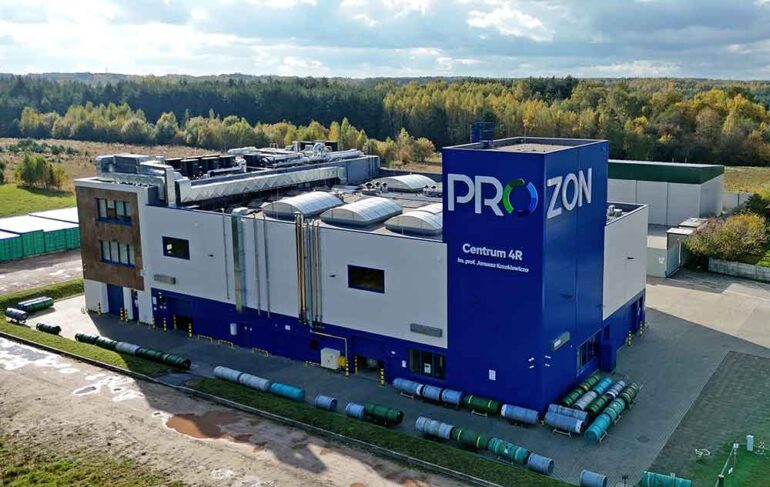
POLAND: A new refrigerant reclamation plant near Warsaw is using two processes to separate mixtures and reclaim nearly 100% of used refrigerants.
Dubbed a one-of-a-kind plant, the new facility uses both rectification and adsorption technologies in its processes. Rectification separates mixtures based on the different boiling points of their components. Adsorption technology is used for components with similar boiling points, using molecular sieves to separate them based on their different molecular sizes.
The plant, near Mszczonów, 40 km from Warsaw, was implemented by a consortium of three entities led by PROZON, an NGO supported by leading Polish refrigerant distributors. The technological solutions were provided by Polish company Chemat, with Czech partner Ekotez organising the refrigerant recovery network in the Czech Republic and Slovakia.
The new plant, comprising production hall, separation system, and office building, which now also houses modern training rooms and a laboratory, was officially opened in October. It has a current capacity of 200 tonnes per year.
“The most difficult challenge was adapting the system to the demanding medium of refrigerants. Selecting the appropriate pumps, seals, and optimising process parameters, among other tasks,” explained Marta Olszewska, head of the rectification and PSA department and laboratory manager at PROZON.
“Currently, we are eliminating refrigerant impurities and sourcing components to create new ones. However, before they are released to the market, they must meet the required quality parameters, which are confirmed by a certificate,” she added.
Since 1996, the PROZON Climate Protection Foundation has been working to protect the ozone layer by recovering and reclaiming ozone-depleting substances. Since 2010, it has focused on mitigating climate change by reclaiming high GWP refrigerants.
During this time, over 2,000 tonnes of refrigerants have been recovered and utilised in PROZON’s 3R (recovery, recycling, reclamation) network.
The 3R centre has now been moved adjacent to the new separation plant and a new Re-Electro facility for recovering and reusing parts of refrigeration and air conditioning equipment, adding a fourth function 4R (Recovery, Recycle, Reclaim, Reuse).
“Annually, the recovery and reclamation of refrigerants in our 3R network reduces greenhouse gas emissions by 300,000 tons of CO2 equivalent. Additionally, as a result of separation in the new refrigerant separation facility, this value increases by 74,000 tonnes,” said PROZON president Krzysztof Grzegorczyk.
Until now, some mixtures had to be destroyed. Thanks to the 4R investment, nearly 100% of the refrigerants will be reclaimed.
“Over the past year, our team has refined the separation technology, and today we face the task of maximising the production capacity of the column and adsorbers to reclaim more, faster, and more efficiently. This project is not our last word. We are implementing further ideas that will significantly reduce climate change and human impact on the environment,” Grzegorczyk added.
As part of the 4R facility, the new Re-Electro hall dedicated to the processing and reuse of dismantled refrigeration and air conditioning equipment was also opened. The facility was established through the implementation of the EU project Re-Electro 4 LIFE, which aimed to introduce innovative solutions in the field of material recovery and component reuse.
“The Re-Electro process involves collecting waste electrical and electronic equipment from across the country, followed by dismantling the units into individual parts, diagnosing them, and distributing components that are suitable for reuse,” explained Re-Electro project manager Martyna Jankiewicz.
“One of the most innovative stages of the process is advanced diagnostics, which enables the testing of each part and the issuance of a certificate confirming its functionality. Thanks to this, we can recover many fully operational components that would otherwise be sent for recycling or disposal.”
The new plant was named after the late professor Janusz Kozakiewicz, who made an invaluable contribution to the development of science and environmental protection, particularly in the fields of the ozone layer and climate protection.