


AREA demands end to uncertified work
6th December 2025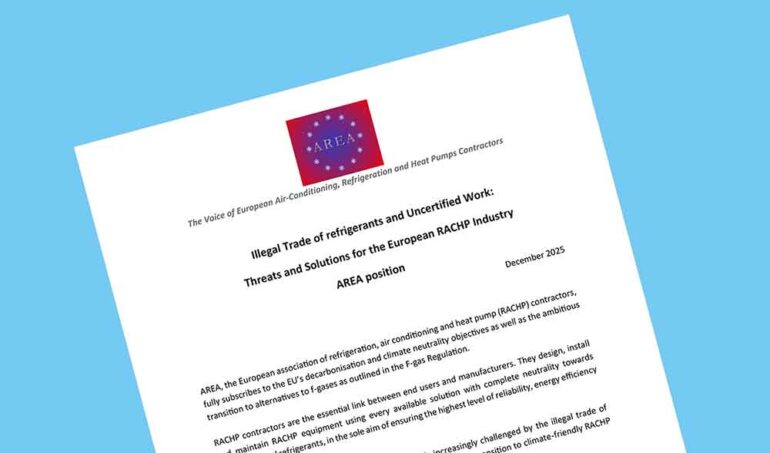
BELGIUM: The European contractors group AREA has called for stricter measures to curb the illegal trade in refrigerants and a clampdown on unauthorised work in breach of the F-gas regulation.
In a new position paper, AREA, which represents 26 national associations from 22 countries, maintains that the two issues are threatening the transition to climate-friendly RACHP solutions.
AREA sees a direct link between the two illegal activities, claiming that many individuals or companies who purchase illegal refrigerants also operate without certification.
With most member states having limited inspection resources, AREA says inspections and follow-up are not always comprehensive.
“This issue is heavily impacting the European RACHP contracting sector,” the statement says. “Unfair competition is a huge problem as uncertified contractors can offer much lower prices, undercutting costs by 20-50%, making it very difficult for qualified professionals to compete, especially with private homeowners or small landlords who prioritise price.”
The practice also slows down the transition to climate-resilient and low-carbon building technologies, AREA claims, citing poor execution, inefficient systems and non-compliance with European and national regulations, as well as possible safety hazards.
“Without the necessary expertise to optimise these systems, there is a significant risk that the resulting solutions will be energy inefficient,” it says.
In addition, it sees a potential damage to consumer trust, not only in contractors associated with illegal refrigerant use, but in the sector as a whole.
Amongst a number of measures, AREA is calling for a mandatory national registry of certified contractors and natural persons, publicly available online. It wants inspection efforts to be strengthened by increasing the internal resource for relevant services, and seeks stronger penalties to deter illegal work.
Illegal refrigerant trade
AREA sees the continued illegal trade in refrigerants as a serious challenges, not only for RACHP contractors but also for society as a whole.
The association argues that the environmental impact of this black market trade is severe, undermining the phase out mechanism by maintaining the availability of high GWP f-gases at low cost.
“Economically, the black market undermines legitimate businesses by flooding the market with cheaper, and possibly non-compliant products,” AREA says. “This creates unfair competition, harms companies that follow environmental and safety regulations and results in significant tax revenue losses.”
It also raises concerns regarding poor quality refrigerants causing equipment failures, reduced efficiency and expensive repairs or replacements. In addition, some illegal refrigerant has been shown to be counterfeit, contaminated or mislabelled, posing risks of equipment failure, fire, or explosion. The contained gas may be toxic, endangering technicians and building occupants.
To combat this growing eco-crime, AREA strongly recommends the establishment of national databases tracking all refrigerant purchases and sales and system charging. It also calls for greater provision to re-enforce inspections and police controls at the borders.
The position paper is available from the AREA website.