


Cooling demand increases 245% since 2010
6th May 2026
UK: The global cooling sector has seen overall demand rise 245% since 2010 and diverged into two distinct markets – a high value commercial sector and high volume residential sector.
These are some of the findings revealed in BSRIA’s latest Worldwide Air Conditioning and Heat Pump reports.
The new studies, covering 18 key AC markets and 15 heat pump markets, identify the key forces shaping the industry; enhanced technology, tighter regulation and the rapid proliferation of data centre cooling systems.
The reports show a clear divergence in pricing between the high-value commercial sector driven by specialist applications and a high-volume residential sector where intense competition is suppressing prices.
In the commercial sector, average selling prices for products like chillers and air handling units rose by 3.6% and 4.5% respectively in 2025. This contrasts with the residential segment, where the average price for ductless split systems has declined. BSRIA’s analysis attributes this to competition, with the top ten suppliers now accounting for over 85% of global sales in this category.
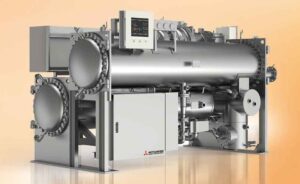
A major growth has been the data centre industry, where AI’s expansion is creating demand for more advanced liquid cooling solutions. This is accelerating the sales of chillers, with some systems, namely oil-free centrifugal chillers, driving more than half of the market in countries like Indonesia, Mexico, Turkey, the UAE or the USA.
From an HVAC and cooling supplier perspective, growth is being driven not only by the increase in data centre numbers, but the increase in higher heat density per facility. AI workloads are pushing racks beyond what traditional air systems can handle, accelerating the adoption of liquid cooling technologies.
Building owners and investors are increasingly focused on lifetime energy performance and the carbon impact of their cooling systems, rather than just the initial capital cost, the reports find. This is leading to evolution around how AC systems look, how they’re procured, financed and operated. This has resulted in a premium for low-carbon, high-efficiency cooling solutions.
The research confirms a rapid shift towards inverter-based systems, particularly in emerging economies. India’s market for inverter split systems is projected to reach 100% by 2029, with Brazil and Saudi Arabia also showing strong growth. This is happening alongside a legislative push to phase down low-energy-efficiency AC systems and HFCs, making low-GWP and natural refrigerants mainstream choices for new cooling systems and retrofits.
BSRIA’s research also confirms that 2025 marked the beginning of a recovery for the global heat pump market. While often associated with cooling, air conditioning systems are playing an increasingly important role in heating installations, with reversible single-splits growing 3.3% by volume on a global scale.
BSRIA research manager Aline Breslauer commented: “2025 was a year of uncertainty, and in the AC market we saw rising competition with increased M&A activity driving consolidation. However, globally the need for cooling technologies remains high, with demand jumping 245% over the past 15 years. We predict that growth will continue, though it will remain uneven amid ongoing economic and geopolitical volatility.
“HVAC’s next phase will not be won by technology alone. It will be won by organisations that are built to operate in this new environment. Advantage will come from adaptability, not optimisation,” she added.
Further information about BSRIA’s World Wide Air Conditioning 2026 report or the Worldwide Heat Pump Market Report 2026, click here.