


Danish researchers rethink ejector design
13th August 2026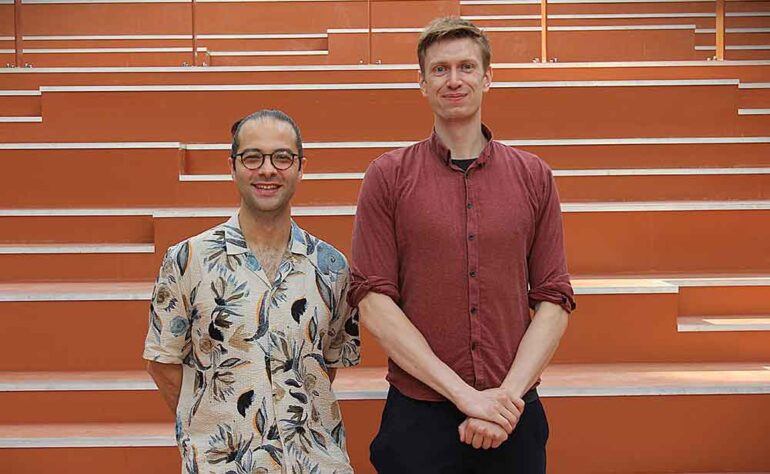
DENMARK: Researchers at the University of Southern Denmark (SDU) claim to have developed a component that both improves efficiency and provides a completely new way of optimising thermal energy systems.
By combining the classical ejector with a specifically designed jet deflection unit, the researchers have developed Jetjector – a new design that not only improves the component’s efficiency but also introduces an entirely new capability that conventional ejectors were never designed to control.
Initial laboratory results are said to have demonstrated improvements in ejector efficiency ranging from 2.2% to 12.3%, depending on the design.
Ejector technology is already used in heating and cooling systems and a wide range of industrial processes. It uses pressure differences to move liquids and gases without requiring an additional mechanical or electrical energy input.
According to the SDU researchers, until now, engineers have optimised ejectors based on two key characteristics: how much they can increase pressure and how much fluid they can transport.
Jetjector introduces a third. The researchers claim to have developed a design that makes it possible to actively control the balance between liquid and vapour inside the component. This, they say, opens up a new way of optimising thermal energy systems and could benefit a wide range of technologies in which phase change plays a central role.
The idea emerged while the researchers were studying and further developing a new multiphase-driven fluid oscillator concept.
During this work, assistant professor Baris Burak Kanbur noticed that the pressure loss through the component at specific design and operating conditions was much lower than anticipated.
This observation raised the question of whether this flow mechanism could be used in two-phase ejectors?
Research assistant Søren Schøler Sundall started to develop a series of different geometries and tested them through advanced simulations and laboratory experiments. Only after numerous iterations did they find a design that worked.
“We were surprised that it worked. Our original goal was simply to explore the idea. When the results showed that we could maintain the ejector’s normal performance while adding an entirely new capability, we realised we were on to something interesting,” said Baris Burak Kanbur.
So far, the technology has been tested using water and water vapour in computer simulations and laboratory experiments. The next step is to investigate how the technology performs with other working fluids, including low GWP refrigerants.
At the same time, the researchers will investigate the underlying physical mechanisms in greater detail, enabling the component to be tailored to different applications.
The researchers see opportunities in data centre cooling, industrial refrigeration, seawater desalination and other thermal energy systems where even modest improvements in energy efficiency could make a substantial difference.