


Call for action on incorrect heat pump insulation
12th October 2026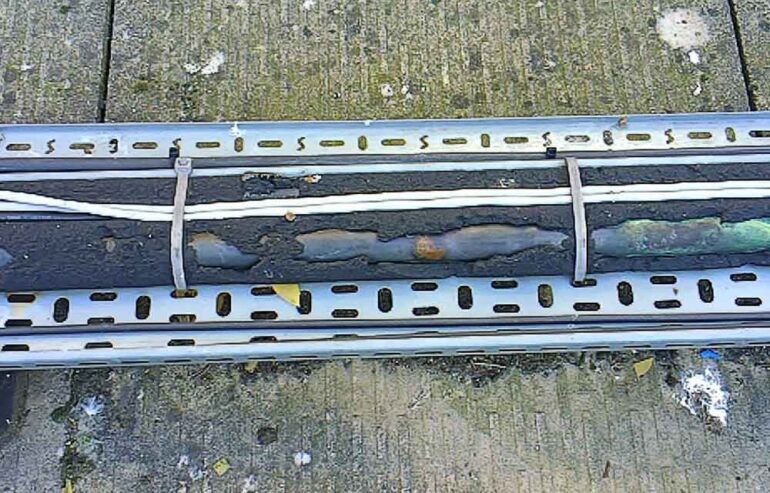
UK: Industry groups are backing calls for a crackdown on incorrectly specified and installed thermal insulation on heat pumps.
Non-UV-resistant pipe insulation materials on heat pumps, such as standard black elastomeric foam, rapidly breaks down when exposed to direct sunlight.
The Proof is on the Roof campaign, launched in 2025 by certified low carbon energy assessor Lawrence Leask and Chris Ridge of the Thermal Insulation Contractors Association (TICA), is now backed by CEFEP, the European association representing FEF and PEF insulation manufacturers, the Building Engineering Services Association (BESA) and the Institute of Refrigeration (IOR).
Leask and Ridge launched the campaign after Leask witnessed degraded refrigeration pipe insulation on nearly all of his TM44 inspections.
While the campaign was begun in the UK, it is thought that the use of incorrect insulation is an issue in Europe as well.
“Over several years of external pipework inspections, I’ve witnessed the environmental impact of using non-UV resistant pipe insulation materials on heat pumps, Leask said. “The energy losses we are incurring through incorrectly specified and installed thermal insulation is equivalent to that of a large power station.”
Chris Ridge, TICA’s Technical Director, said that thermal insulation of pipework was a “low hanging fruit” for decarbonisation, but was often no more than an afterthought. “The sheer scale of energy losses resulting from poorly insulated pipework should not be ignored by our policymakers,” he said.
While the majority of pipe insulation installations require a thermal insulation specialist, commercial air-to-air heat pump installations are usually insulated by the refrigeration contractor.
“This is another excellent example of an easily rectified, widespread problem that would make a significant contribution to improving performance and reducing environmental harm,” commented BESA technical director Kevin Morrissey.
Tom Merton, technical manager of CEFEP member company Armacell, called for a greater focus on long-term exposure to sunlight, rain, frost and temperature cycling. “UV and weather-resistant insulation help maintain thermal performance, condensation control and energy efficiency while reducing the risk of cracking, moisture ingress and premature replacement,” he said.