


Carrier cooler protects building workers
11th October 2026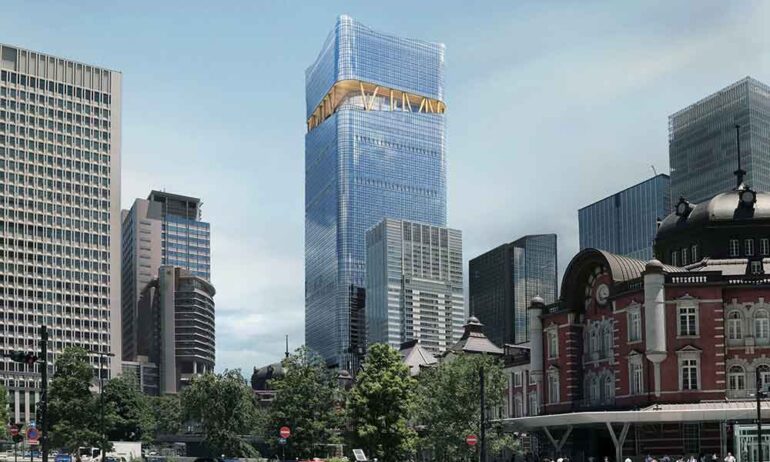
JAPAN: Construction workers building Tokyo’s Torch Tower, Japan’s tallest building, here being kept cool thanks to a temporary cooling system jointly developed by Carrier Japan.
Spearheaded by the Shimizu Corporation, the building’s main contractor, the cooling system has been developed to prevent heatstroke and improve the working environment at the construction site.
Scheduled to be completed in 2028, the Torch Tower will be the tallest building in Japan at 385m and will be the focal point of a redevelopment district near Tokyo Station.
Mandatory heatstroke prevention measures have been in place in Japan since June 2025. The law applies to work that is expected to be carried out for more than one hour continuously, or more than four hours a day, in an environment where the heat index is 28 or higher, or the temperature is 31°C or higher. Failure to comply could result in imprisonment of up to six months or a fine of up to JPY500,000 (€2,800) for the business operator.
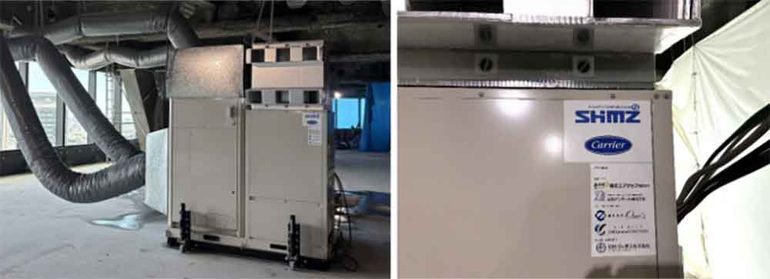
Conventional spot coolers supply cool air but release exhaust heat into the room, making it difficult to lower the temperature in enclosed spaces such as high-rise building construction sites partitioned by exterior curtain walls. The new cooling system aims to solve this problem by utilising the openings in the exterior curtain wall to exhaust heat outdoors.
This system employs Carrier Japan’s Single Ace U air-cooled, all-in-one package air conditioner. In this project, the Single Ace is made portable by attaching a dedicated mounting frame, allowing its installation location to be moved according to the progress of construction. Furthermore, by combining it with supply and exhaust ducts and a heat treatment mechanism, it has been developed into a temporary cooling system that can cope with the hot environment unique to high-rise construction sites.
Prior to deployment, Carrier Japan constructed a demonstration environment simulating an actual construction site at its Fuji factory and conducted performance evaluations with Shimizu Construction present.
The airflow and cooling performance when the supply and exhaust ducts were connected were verified, and the system was introduced to the site only after confirming the necessary quality and performance for actual operation.
By using Carrier Japan’s remote monitoring system, a demonstration test will also be conducted to verify that the operating status can be achieved in real time even at construction sites with restricted access, leading to stable operation and more efficient maintenance.