


Delayed HFC bans to become law
2nd July 2015 USA: With new US HFC refrigerant bans about to become law, industry pressure has delayed measures which could have banned R134a and R404A from the end of this year.
However, the two commonly used refrigerants, along with a number of other high GWP service and retrofit blends, will be banned in certain applications, some from as early as January 1, 2017.
The Environmental Protection Agency (EPA) first announced a proposal to delist a range of HFCs from its Significant New Alternatives Policy (SNAP) in July last year. This included their use in a number of industrial applications, including use as refrigerants, blowing agents, fire suppressants and aerosols.
Under the original proposals the commonly-used supermarket refrigeration gases R404A and R507A and others would have been banned from new and retrofit retail food refrigeration and new and retrofit vending machines, from January 1, 2016.
The 7,500+ comments on the proposed listing decisions, as well as the proposed change of status dates, obviously had an effect, with the bans being delayed by as much as four years.
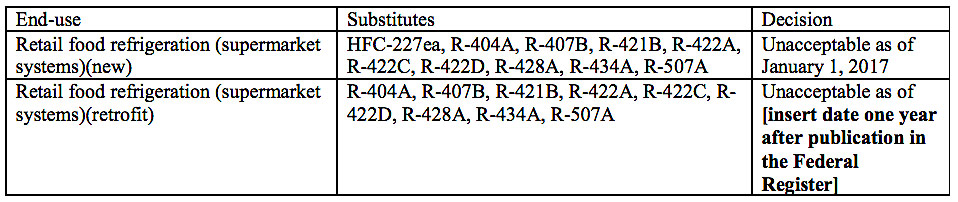
The pre-publication final rule signed today by EPA Administrator, Gina McCarthy, reveals that R404A and R507A will now be effectively banned from use in new supermarket systems from January 1, 2017 and as retrofits from July 1, next year. The full list can be seen in the table below:
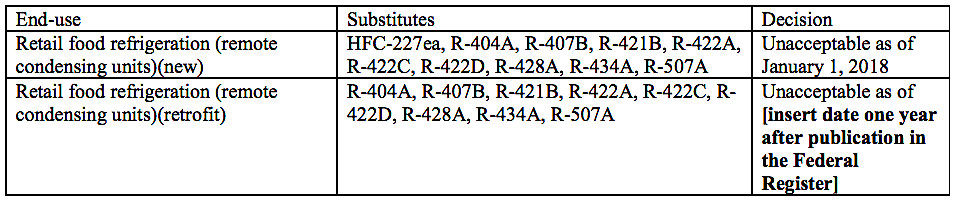
In retail remote condensing units, the gases have had a two-year stay of execution and will now be banned from January 1, 2018. However, for retrofits the ban will be from July next year.
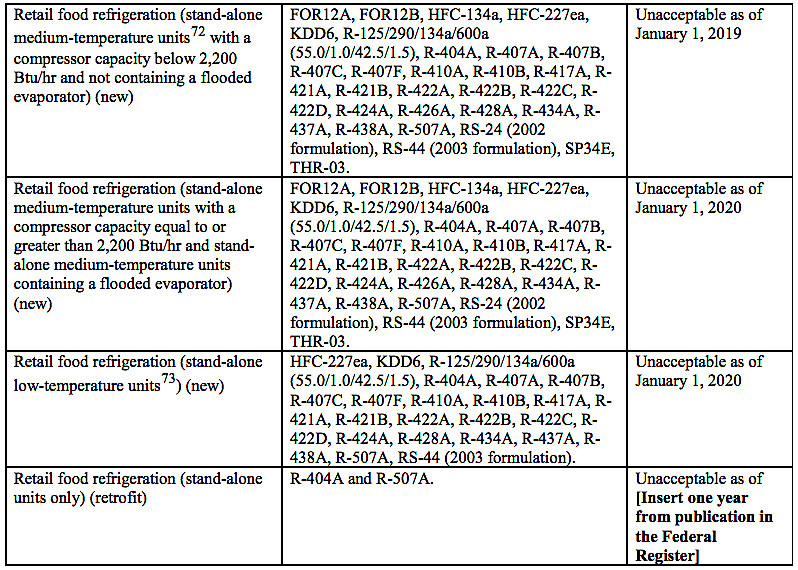
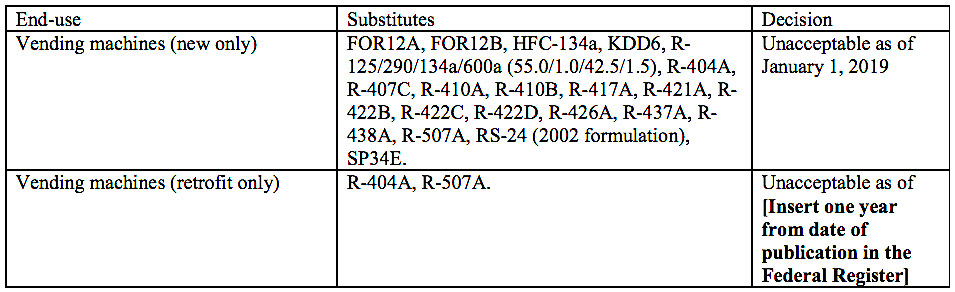
Bans for use in stand-alone retail food refrigeration equipment, where R134a and R404A are commonly used, is based on product type but will range from January 1, 2019 to January 1, 2020. Rules for vending machines are similar, as set out in the tables below:
As a vehicle air conditioning refrigerant, R134a will be banned from use in newly manufactured light-duty motor vehicles beginning in model year 2021 except for exports to certain countries. It will be unacceptable for use in all newly manufactured light-duty vehicles beginning in model year 2026.
The announcement was swiftly applauded by refrigerant manufacturer Honeywell, describing it as a landmark action. “The EPA’s action will accelerate the adoption of solutions with far less impact on the atmosphere while also spurring private sector innovation and creating jobs,” said Ken Gayer, vice president and general manager of Honeywell’s Fluorine Products business.