



New material boosts passive radiative cooling
22nd August 2026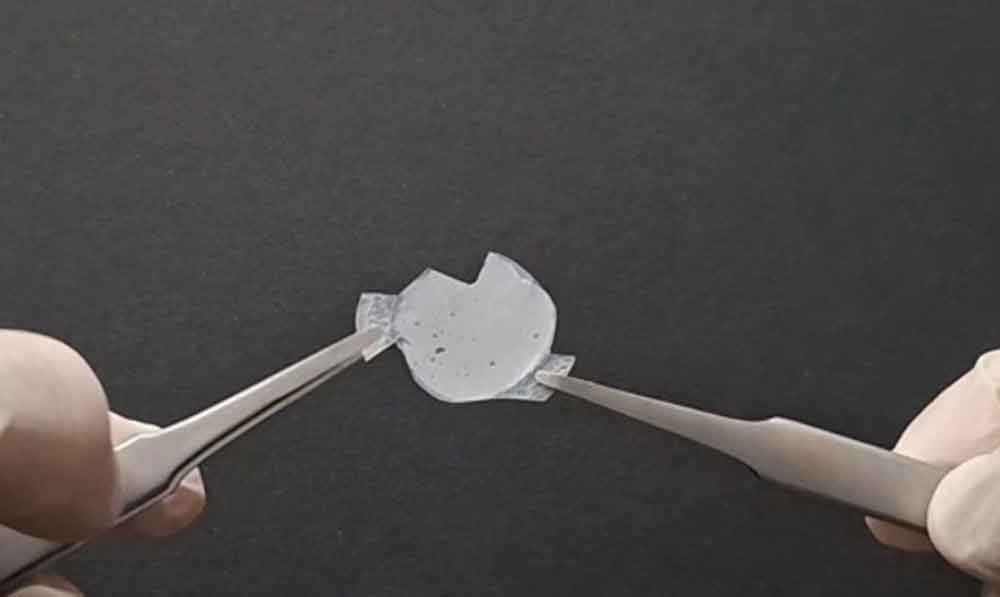
SPAIN: A research group at Madrid’s Institute of Micro and Nanotechnology (IMN-CNM, CSIC) has developed a new nanomaterial capable of cooling surfaces under solar radiation without consuming electricity.
Although still in the development phase, the results from the new material are said to demonstrate potential as a sustainable alternative to conventional refrigeration systems.
The research presents a new strategy for fabricating three-dimensional nanostructures of polyvinylidene fluoride (PVDF), a polymer with a high capacity for emitting heat in the infrared, using nanoporous moulds of anodised aluminium oxide.
The work is based on passive daytime radiative cooling (PDRC), a physical phenomenon by which certain materials can dissipate heat to the outside in the form of infrared radiation without requiring an external energy input. For this mechanism to work, the material must reflect most of the solar radiation to avoid overheating and efficiently emit the heat accumulated in the so-called atmospheric transparency window (between 8 and 13 micrometers), a region of the spectrum through which the atmosphere allows thermal radiation to escape into space. Under favourable conditions, this balance allows the material to reach temperatures below that of the surrounding environment in a completely passive manner.
“These PVDF polymers have a combination of properties that are particularly suitable because they emit heat very well in the infrared, their resistance to ultraviolet radiation, their hydrophobic nature that favours the self-cleaning effect and remains stable against humidity, as well as their durability outdoors,” explained Cristina Vicente, a researcher at the Institute of Micro and Nanotechnology.
To optimise the material’s behaviour, researchers fabricated a three-dimensional network of PVDF nanostructures by infiltrating the polymer into nanoporous alumina templates. They then subjected the material to various cooling processes and ultraviolet radiation treatment, which increases solar reflectance by bleaching the material.
Tests conducted outdoors during the summer of 2025 on the rooftop of theInstitute in Tres Cantos, Madrid, confirmed the theoretical predictions. Under the most favourable conditions – warm, dry days with high solar radiation – the material reduced the temperature by up to 12.9°C compared to an uncoated reference sample.