


Skid-based CDU for scalable capacities
30th October 2025
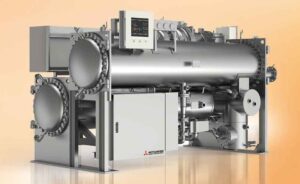
UK: Critical cooling specialist Airedale by Modine has extended its liquid cooling coolant distribution unit (CDU), with the introduction of a modular, skid-based design for capacities of 2MW+.
The launch of the skid-based CDU expands the product range to three standard footprints, offering scalable capacities from 400kW up to 2MW and beyond, at a 4K approach.
Engineered for longevity and performance, each unit is said to feature premium components including stainless steel pipework, 25-micron filtration, and active harmonic filtration to offer an expected lifecycle that could exceed 15 years.
Airedale by Modine is seeing a growing trend among data centre operators for the strategic placement of CDUs within the facility’s ‘grey space’, including corridors and plant rooms, rather than directly adjacent to server racks. This approach, the company says, offers greater spatial flexibility and opens up new possibilities for design optimisation.
While in-row CDU configurations continue to attract interest, Airedale by Modine maintains that the skid-mounted design is gaining traction due to its open architecture, which allows for easier access during maintenance. Although it occupies a larger footprint, it argues that the skid design supports a higher component density, enabling enhanced redundancy and reliability across cooling systems.
“We’re seeing operators rethink traditional layouts to unlock greater efficiency and resilience,” said Airedale by Modine product manager Richard Burcher. “By relocating CDUs to less congested areas of the data centre, they’re not only improving accessibility for maintenance but also future-proofing their infrastructure with scalable, high-redundancy solutions.”
Airedale by Modine CDUs are equipped with integrated intelligent controls that enable networking of up to eight units. The unit controls are fully compatible with site-wide building management systems. Built on the Redfish standard protocol, these units are said to communicate early fault signals to the BMS, enabling handshake permission before initiating any switchover, ensuring optimal uptime and site-wide coordination.
Maintenance is also said to be simplified with a dedicated maintenance mode, allowing filters to be cleaned and pumps serviced safely without interrupting operation, provided all safety protocols are correctly followed.
The new units will be manufactured globally at Airedale by Modine facilities across Europe, North America and Asia Pacific.