


ESEAC cuts peak demand and lowers energy bills
7th September 2025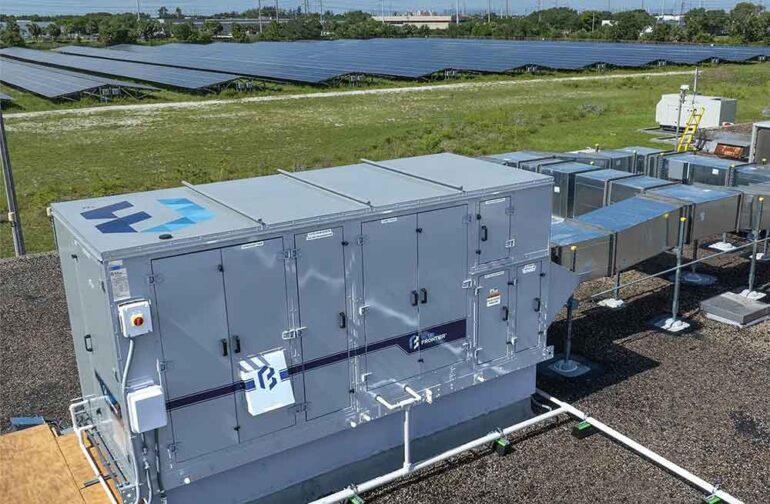
USA: The integration of energy storage, cooling, and humidity control into a single commercial system has been developed by the US National Renewable Energy Laboratory and Blue Frontier.
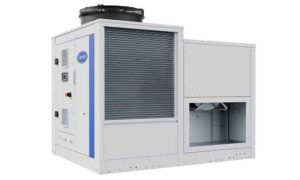
The ESEAC (Energy Storing and Efficient Air Conditioner) technology is being commercialised by Florida-based Blue Frontier Inc into its dedicated outdoor air system.
Designed for commercial use, the ESEAC technology is claimed to be able to cut peak air conditioning power demand by more than 90% and lower electricity bills for cooling by more than 45%.
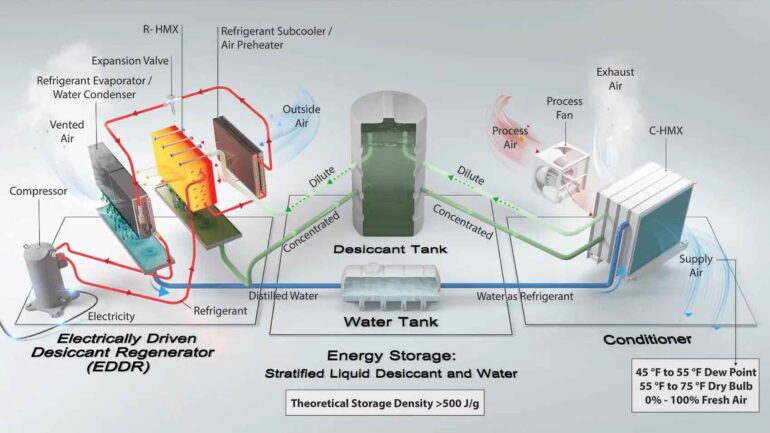
ESEAC takes a different approach to traditional vapour/compression refrigeration by separating dehumidification from active cooling using a liquid desiccant system that absorbs moisture directly from the air. Then uses ultra efficient indirect evaporative air conditioning to precisely cool down the air.
This method requires significantly less energy than conventional dehumidification processes, helping reduce operating costs. The system’s integrated energy storage also allows it to operate without running compressors during expensive peak demand periods.
“This is a large step forward for air conditioning,” said Eric Kozubal, senior engineer and co-inventor of the technology at National Renewable Energy Laboratory (NREL), the US Department of Energy’s primary national laboratory for energy systems.
“It’s a complete rethinking of how we condition air – and when we use electricity to do it. ESEAC shifts the most energy-intensive part of the process to off-peak hours, reducing costs and easing demand on the grid,” Kozubal said.
A year-long simulation in Miami, Florida, showed that a 20-ton ESEAC system reduced cooling-related electricity use by 38%, peak demand by 93%, and annual electricity costs by 45%. Over 15 years, this amounts to an estimated $165,000 in savings per unit.
By shifting energy use away from peak periods, ESEAC eases demand on the electric grid, helping utilities flatten demand curves and reduce reliance on costly grid storage or peaking plants. Flattening demand and reducing total electricity frees up grid capacity, making it available for other uses.
Storing energy in saltwater and pure water costs roughly 10 times less than battery-based systems, providing a scalable, lower-cost way to manage cooling loads.
“Air conditioning is a top driver of peak demand and a major reason for costly grid expansion,” said Achilles Karagiozis, director of NREL’s Building Technologies and Science Centre. “ESEAC stores energy when electricity is cheap and uses it during peak times—delivering energy storage benefits at a fraction of the cost of batteries.”
With early backing from Breakthrough Energy Ventures, Volo Earth, 2150, Modern Niagara, and major utilities, ESEAC systems are being installed at sites across the United States. These include US Army Fort Benning (Georgia), Westover Air Reserve Base (Massachusetts), an IMAX theatre at the Museum of Discovery and Science (Florida), Barry University and Valencia College (Florida), healthcare centres, a restaurant in Georgia and grocery store in California.