


Harlem Hospital a possible source of LD outbreak
31st August 2025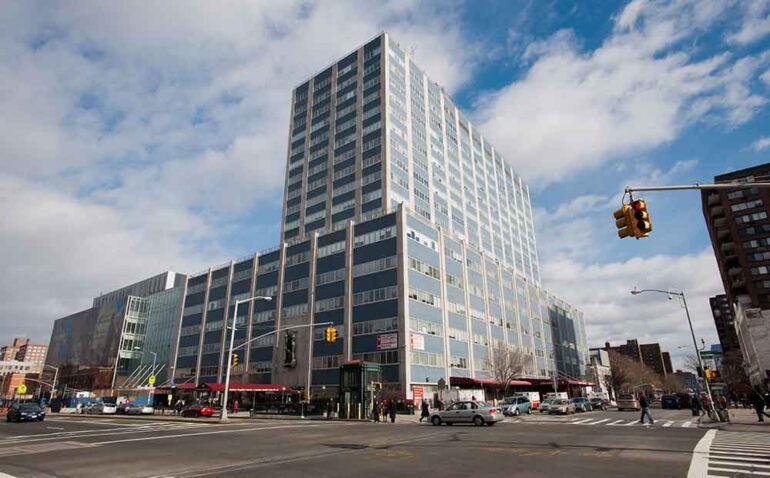
USA: Harlem Hospital, which has been treating victims of New York City legionnaires’ disease outbreak, has been identified as one of two possible sources.
With the outbreak now officially declared as ended, the New York City Health Department has revealed that molecular analysis of the legionella bacteria from human victims and cooling tower specimens has matched the source to two possible locations – Harlem Hospital and a cooling tower at a nearby construction site.
The outbreak, which was first identified on July 25, resulted in 114 cases of the disease associated with this cluster. Seven people died and 90 were hospitalised, with six remaining in hospital. The last case of someone feeling symptoms of legionnaires’ disease was August 9.
Initially, 12 cooling towers on 10 buildings were tested culture positive for live legionella bacteria.
After extensive investigation, the legionella strain found in seven patients was matched to samples from the Harlem Hospital cooling towers and a nearby construction site overseen by NYC Economic Development Corporation (NYCEDC) and construction contractor Skanska USA.
The Health Department sampled the Harlem Hospital cooling towers on July 25. Harlem Hospital disinfected the cooling tower on July 30, the same day that the Health Department again inspected the cooling tower and found it to be in full compliance with regulations. On August 7, after the Health Department’s sample came back positive on the culture test, Harlem Hospital drained, disinfected, and refilled the cooling tower.
The Health Department sampled the cooling tower at the construction site at 40 West 137th Street on July 28. This gave a positive test, and Skanska completed a full remediation on August 1.
Praising the efforts of hospital care staff for their efforts dealing with the surge of patients, NYC Health + Hospitals president and CEO Mitchell Katz said: “I also want to recognise our engineering team, who run a robust cooling tower maintenance programme that exceeds requirements by the NYC Health Department, treating the cooling towers each day with chemicals to minimise harmful microbes.
“Thanks to them, we know that the cooling tower at Harlem tested negative for legionella in March and June, and as part of routine maintenance, was fully disinfected on July 2, three weeks before the first case in the cluster.”
On the announcement of the ending of the outbreak, New York City mayor Eric Adams said: “Today marks three weeks since someone with symptoms was identified, which means New Yorkers should be able to breathe a sigh of relief that residents and visitors to Central Harlem are no longer at an increased risk of contracting Legionnaires’ disease — but our job here is not done. We must ensure that we learn from this and implement new steps to improve our detection and response to future clusters.”
New York City claims to have among the most rigorous and protective laws and regulations to reduce the risk of legionnaires’ disease, but a package of resources and policy changes are being proposed to further reduce the risk.
Building owners with cooling towers are required to take a number of steps, including registering a cooling tower, developing and implementing an operating protocol, and monitoring water quality at least three times a week. The Health Department conduct inspections to promote compliance with these requirements.
New proposals include expanding the Health Department’s capacity to inspect the city’s cooling towers, including hiring additional water ecologists to conduct inspections and building system engineers to assess building mechanical systems and plumbing.
It is also proposed that building owners should be required to test for legionella at least every 30 days during the cooling tower operating period instead of the current 90-day requirement.
Increased fines for violations of cooling tower local laws and regulations are also proposed.
In addition to these proposals, the Health Department is undergoing a full review of the city’s cooling tower rules to further strengthen city regulations.