


HFC use rising 16%/yr in A5 countries
5th October 2016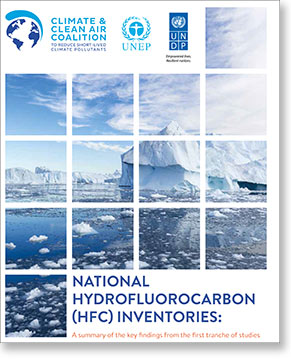 FRANCE: HFC refrigerants are said to be rising at an annual rate of 16% in developing countries, according to a new report.
The report by the Climate and Clean Air Coalition (CCAC) and the UN Environment OzonAction Branch, entitled National Hydrofluorocarbon (HFC) Inventories: A summary of key findings from the first tranche of studies, summarises the findings from Bangladesh, Chile, Colombia, Ghana, Indonesia and Nigeria.
The report claims that HFC use will rapidly rise in the coming decades unless more is done to curb their growth.
“Without a doubt, growing populations and economic development are exponentially increasing the demand for refrigeration and air conditioning,” said Helena Molin Valdes, head of the CCAC secretariat. “If we continue down this path, without developing alternatives to HFCs and more energy efficient appliances, we will put great pressure on the climate system.”
The CCAC says its 50 state partners strongly support the adoption of an ambitious HFC phase-down amendment to the Montreal Protocol at next week’s meeting in Kigali, Rwanda. A communique released by the CCAC’s high level assembly said that the amendment should include an early freeze and rapid action to phase down HFCs.
“Now is the time and Kigali is the place,” Molin Valdes said. “A HFC phase-down amendment will represent the biggest climate deal this year.”
The country inventories outline opportunities to avoid growing HFC use and to phase down existing consumption. They show that there are significant differences among countries in terms of the sectors where HFC use is growing, with some countries having larger consumption in domestic or commercial refrigeration, and others in mobile or stationary air conditioning.
The inventories also show that out of the different chemicals R134a is the most common, accounting for an average of 80% of HFC use from 2011-2014 across the six countries. While R134a has a GWP of 1300, by 2020 the HFC blends, R401A (which has a GWP of 1300), R404A (GWP of 3300) and R507A (GWP of 3300) will have an increasingly larger share of the total.
The CCAC will be organising a side event to present the main findings of this report on the margins of the Montreal Protocol Meeting of the Parties in Kigali, Rwanda on October 14.
The report can be viewed and downloaded here.