


Switchless AC system achieves 25% energy cut
17th March 2026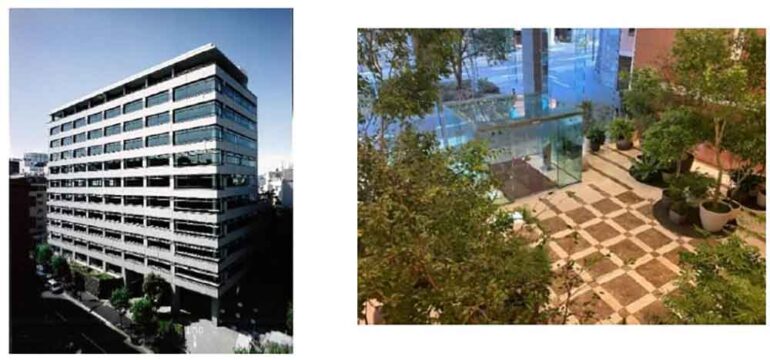
JAPAN: Daikin claims to have achieved an annual energy saving of approximately 25% in a commercial zero-energy office building using a so-called “switchless” air conditioning system.
Switchless air conditioning is described as a system that automatically controls air conditioning by acquiring environmental information inside and outside the building, such as temperature, humidity, and CO2 concentration, using various sensors.
Inside a building, the heat load is constantly affected by factors such as the presence of people, lighting, and sunlight. By understanding these changes in heat load in real time and performing optimal air conditioning control, the system is said to achieve both energy efficiency and comfort.
In a one-year field trial from January to December 2025, a switchless air conditioning system was employed on a 500m2 area of the Ichibancho Tokyu Building, operated by Tokyu Land Corporation.
Following renovation work in 2023, the building was already ZEB Oriented, Japan’s building evaluation for non-residential buildings that have reduced primary energy consumption by 30-40%.
As a result of introducing this system, the amount of electricity consumed for air conditioning and ventilation is said to have been reduced by 24.6% annually compared to the previous year. In particular, during the heating season, the reduction was 52.1%.
The Daikin multi-split air conditioning system comprises 15 indoor units, two outdoor units, and four DESICA units. DESICA is a Daikin humidity control and dehumidification unit that can humidify and dehumidify outside air without the need for water piping.
The switchless air conditioning system continuously acquires environmental information from inside and outside the building, analyses and makes decisions on an edge server, and then issues commands to existing multi-split air conditioners and ventilation/humidification equipment for the building, thereby autonomously optimising the air conditioning without the need for human operation of a remote control.
The edge server comprises a control box PC running Linux OS. It performs calculations for each function based on indoor environment and air conditioning information.
The sensor group collects temperature, humidity, CO2 and weather data, and estimates and schedules the optimal air conditioning control on the edge server. The server integrates logic for pre-cooling/pre-heating control, indoor unit count/airflow control, ventilation volume control, etc, to maintain comfort while suppressing inefficient operation at low loads.