


Bringing ink-based technology to thermoelectrics
29th June 2026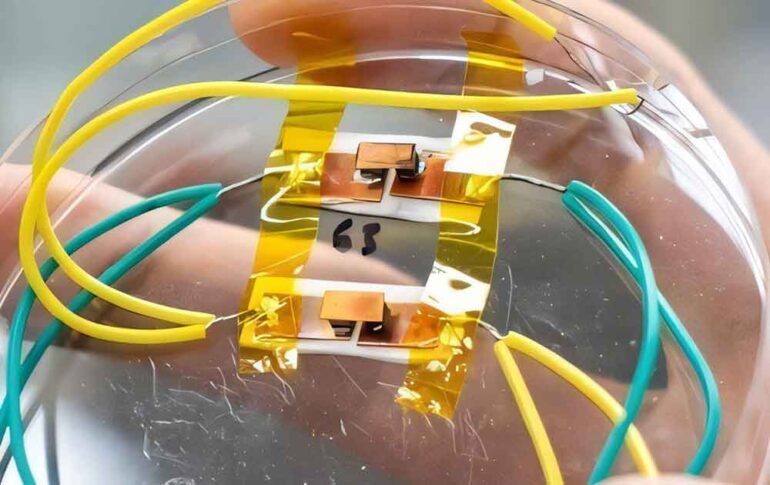
USA: A recent study by University of Notre Dame researchers claims to have developed an ink-based printing technology to create low-cost and high-performance thermoelectric materials and devices.
In the past, widespread adoption of thermoelectrics has been challenging due to the high costs associated with traditional manufacturing processes.
“By making thermoelectric devices a competitive and commercially viable technology, it can transform the way we cool things,” said Yanliang Zhang, advanced materials and manufacturing collegiate professor of aerospace and mechanical engineering at Notre Dame.
He described the devices as highly effective in cooling and very conducive to large-scale industry manufacturing. “We can make the devices faster and with less cost. I think the biggest advantage of our process is its simplicity.”
The team use blade coating or screen printing to directly convert the initial inks into the final device pattern, the same process as screen printers use for artwork on T-shirts.
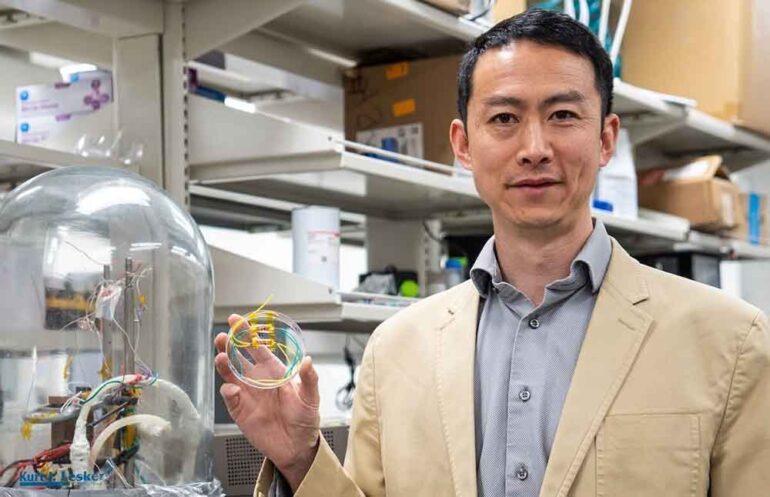
“But our ink contains silver and selenium, which become the thermoelectric material after printing and post-print processing. We invented an ink that is highly compatible with the printing process, which allows for easy scalability,” Zhang said.
During the development process when the research team initially combined the silver and selenium elemental powders to make the ink, they discovered that the silver and selenium reacted very quickly to form the silver selenide alloy. “This fast chemical reaction speeds the manufacturing process, which can be more cost-effective,” Zhang said.
The alloy ink composition was then further optimised between the two elements to achieve the maximum thermoelectric performances.
Upon testing and comparing with current state-of-the-art bulk materials available today, the optimised printed materials are said to have achieved competitive room-temperature performances for both P-type and N-type components.
In thermoelectrics, P-type (positive) components are engineered to have a deficiency of electrons, while N-type (negative) components have been deliberately “doped” to have an excess of free electrons. Together they are the fundamental building blocks used to convert heat into electricity (generators) or electricity into active cooling (Peltier devices).
The team’s earlier research focused on the printed P-type thermoelectric alloy, whereas the newer silver-selenium alloy material is for N-type thermoelectric materials.
“We are continuing to investigate how to transform high-performance material into high-performance devices. We want to discover how we can combine the P-type and N-type semiconductors, the metal electrodes, and then connect all the components into a final, complete system,” Zhang said. “We want to improve the material to the point that the heating, ventilation, air conditioning and refrigeration industry will feel very confident to adopt it.”
This research was primarily supported by the US National Science Foundation (NSF) Environmentally Applied Refrigerant Technology Hub (EARTH), whose mission is to create the first sustainable refrigerant life cycle-engineered system.