


Guide charts boom in CO2 refrigeration
17th July 2020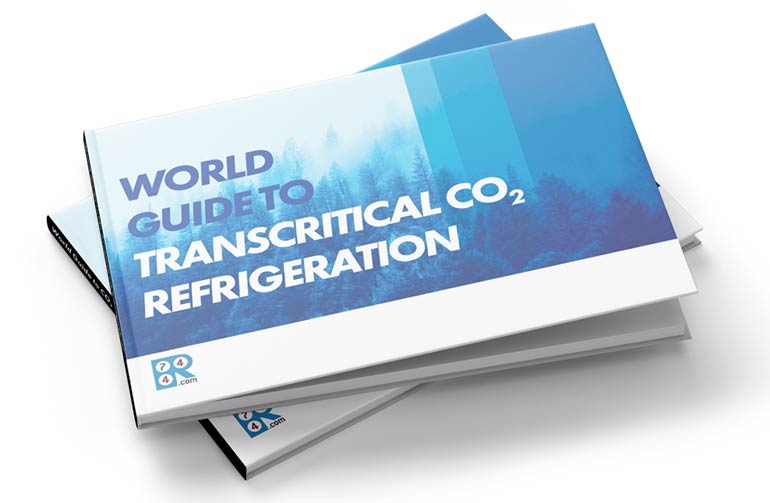
BELGIUM: The accelerating adoption of transcritical CO2 refrigeration systems, from just 140 in 2008 to over 35,000 today, is highlighted in a new report from Shecco.
The free-to-download Global Guide to Transcritical CO2 Refrigeration, which includes chapters in Part 3 on industrial refrigeration and future market trends, shows positive trends for using CO2 in a wide range of applications around the world.
Said to be backed by extensive global research, the report estimates the number of is more than 35,500 systems today. This is an exponential increase from the mere 140 installations counted in 2008, all of which were in Europe. This growth is most noticeable within regions such as Europe, the US, Canada, Japan, Australia, New Zealand, and South Africa.
“It is exciting to note the rapid rate at which transcritical CO2 refrigeration installations are increasing globally – no longer just in Europe alone,” said Shecco’s market development manager, and lead author of the guide, Ilana Koegelenberg.
One of the most notable trends is the expansion of suitable applications beyond the traditional commercial food retail industry. “Today, especially in Europe, transcritical CO2 has become almost a ‘no-brainer’ for both new and retrofit installations,” said Koegelenberg.
Part 1 of the guide, published in May, highlights the history of CO2, its key characteristics, basic system descriptions, and includes a chapter on practical, real-life transcritical CO2 applications around the world.
Part 2, published in June, is based on a global industry survey and includes a policy update, articles on convenience store applications and more traditional commercial refrigeration uses, as well as case studies.
The complete guide now includes the previously unreleased Part 3, featuring chapters on industrial refrigeration trends and the future of the market, case studies, and a section on drivers and barriers to the uptake of CO2.
To promote the complete guide, Shecco is holding a webinar on July 23 to share key findings. It will include presentations by Ilana Koegelenberg and colleague and market analyst Zita Laumen.
The webinar will highlight the guide’s most important findings, including market data on the number of installations, survey information, partner case studies, and trends in convenience stores, commercial installations and industrial applications.
The complete guide can be viewed and downloaded here.